Grain Valley News
  • Home
  • About
    • Contact
  • News
  • Community
    • Best of Grain Valley

​news

MDC offers pond management workshop Sept. 9 at Powell Gardens

8/24/2023

 
by Bill Graham, Missouri Department of Conservation
​

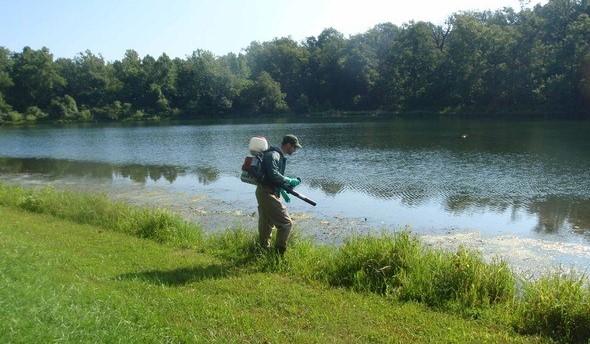
Ponds can be managed to improve fishing and to reduce problems from nuisance aquatic vegetation. The Missouri Department of Conservation (MDC) will host a pond management workshop from 10 to 11:00 a.m. on Saturday, Sept. 9, at Powell Gardens. The botanical gardens are east of Kansas City and west of Warrensburg off U.S. 50 in Johnson County.

Austin Worth, MDC private land conservationist, will provide information on managing fish populations and aquatic vegetation in ponds. Controlling nuisance aquatic plants will be among the topics covered. Pond owners can ask questions and get specific information about dealing with problems at their pond. Participants are also asked to bring plant samples or photographs of any plants causing problems in their pond. Biologists can identify the plants and recommend options for control. Participants will also learn about aquatic plant identification.

Some native aquatic plants are beneficial. But ponds can also become infested with non-native, invasive plant species that can harm fishing and aesthetics. Solutions are available.
The MDC workshop is free. But Powell Gardens does have a $12 admission fee. Participants are encouraged to tour the garden’s rich floral displays and scenic ponds before and after the workshop.

Registration is required. To register, visit the Powell Gardens webpage at https://short.mdc.mo.gov/4s5.
​
For MDC’s online information about pond management, visit https://short.mdc.mo.gov/ZNa.
Picture
Picture

Is it a Weed or a Wonderful Plant?

8/10/2023

 
by Cathy Bylinowski, MU Extension Horticulture Instructor
​The plants described below are edible. They have their good and not so good characteristics depending on their location and your gardening goals. The information below can help you decide whether or not to allow them in your garden or yard and use them as cooking ingredients.

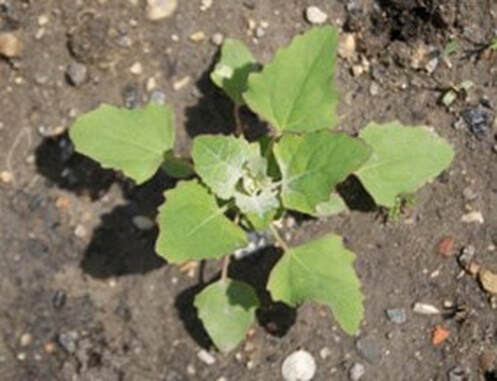
Lambsquarters- Chenopodium album
Human have  eaten Lambsquarters for thousands of years. While this common weedy species, Chenopodium album, probably originated in Europe, ancient seeds of related species have been found by archaeologists in the U.S. Tender leaves and seed clusters are best eaten boiled, steamed, or stir fried. The taste similar to spinach and contain vitamin A and C.

If left to grow it can get a woody stem that is difficult to remove. If left to go to seed, the plant can become a difficult to control weed. 
​
Lambsquarters grow in full sun, in disturbed soil and garden soil. It can be found on woodland edges and shaded areas. Do not harvest from fertilized agricultural fields or fertilized soil in your garden or yard as nitrates can accumulate in the plants’ tissues to an unsafe level if eaten in large quantities. Pay attention to the where the plants are growing and pick leaves from plants growing in unfertilized or nutrient poor soils. 
​
Concerns over oxalic acid content in lambsquarters can be overcome by cooking the greens before eating them. Rhubarb, spinach, and Swiss chard also contain oxalic acid. 
Picture
Lambsquarters Iowa State Integrated Crop Management Bob Hartzler

​

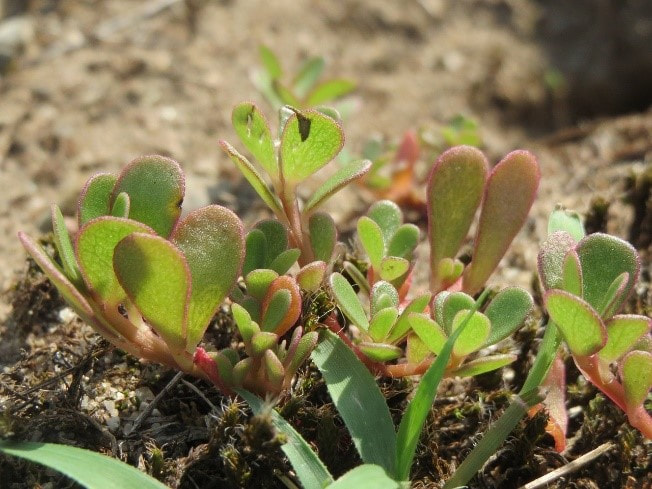
Purslane- Portulaca oleracea
Purslane grows close to the ground and can form a thick mat. Its leaves are flat, thick, and succulent. The edible variety has small flowers. This plant is related to Rose Moss, an ornamental annual that many people grow in their flower gardens.

Purslane, known in Spanish as verdolaga, is used in Mexican and other cultures’ cuisines. It has a tart flavor and crunchy texture. It can be eaten raw or included in stir fry dishes. If you harvest purslane from your garden, yard, or wild places in your neighborhood, be sure to carefully wash the leaves and stems before using.

Purslane is a plant source of omega 3 fatty acids that scientists and doctors state are beneficial for heart health.
​
Vegetable seed companies sell cultivated varieties of purslane.  
Picture
Purslane Image by Wikimedia Images Pixabay

​

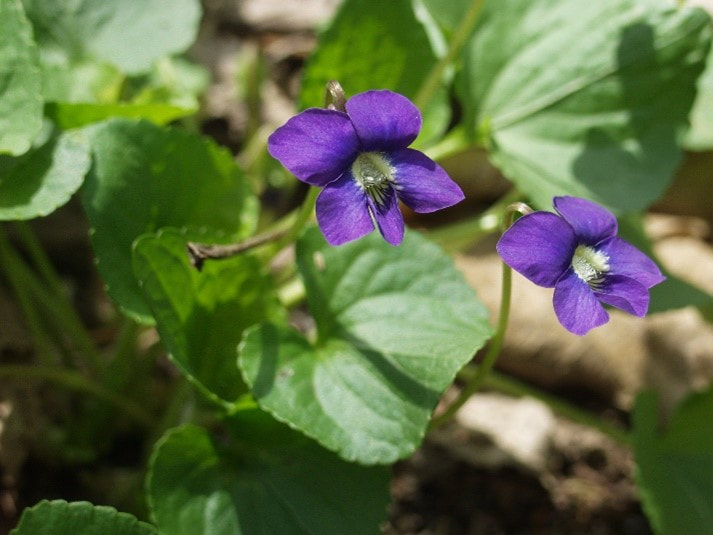
Wild Violets Viola sororia
Violets, with their blue and purple flowers, are a welcome spring sight in many yards unless the homeowner insists on a turfgrass-only yard. Many violets in the yard can indicate moist soil and shady areas. Too much shade makes it difficult to grow a vigorous turfgrass lawn.

Some gardeners allow violets to grow in their yards and take advantage of their tender spring leaves and flowers as an addition to salads. They contain vitamin A and C. If you are ambitious, you can candy the flowers and use them for cake decorations!
​
Wild violet leaves are the host food for caterpillars of several Midwest fritillary butterfly species. Leaving some violets in your yard supports butterfly and native bee biodiversity. 
Picture
Creative Commons/Wikimedia Commons, by Cbaile19

​

You can decide whether these plants are weeds or wonderful after educating yourself about these and other wild edible plants. Like other annual plants that produce many seeds, lambsquarters and purslane can take over disturbed and bare soil unless they are picked and excess plants are removed.
​
Important points when collecting wild edible plants:
  • Careful, accurate plant identification is essential. Be cautious. If you are not sure of a plant’s identification, do not eat it. Get the assistance of local MU Extension Field Specialists in Horticulture or other reliable sources for plant identification.
 
  • Get permission of property owners before harvesting.
 
  • Harvest at least 50 feet from roads due to possible soil contamination from the days of leaded gasoline. Avoid harvesting wild edibles growing near older buildings that could have had lead paint in the past. Also be sure to harvest from areas that have not been sprayed with pesticides or from agricultural fields that have had applications of fertilizer.
 
  • Learn about wild edible plants from experienced foragers who know how to identify local edible plants.  
 
Picture

​Help Trees Recover From Drought

7/13/2023

 
by Cathy Bylinowski, M.S. Horticulture, University of Missouri Extension

“Because they are difficult and expensive to replace, your trees need attention during and after periods of drought,” says University of Missouri Extension State Forestry Specialist Hank Stelzer. “Most of a tree’s active roots are within the top few inches of soil and can extend well beyond the edge of the tree’s canopy,” Stelzer says. Not only are they competing for water during drought, but high air temperatures can actually bake the soil and severely damage or kill fragile, fine roots critical for water and nutrient uptake.

“Perhaps most life-threatening to a tree suffering drought is invasion by borers and disease organisms as the tree is recuperating and still in a weakened state,” he says. Oaks are more susceptible to oak wilt, hypoxylon canker, and hardwood borers. Pines are more likely to become infested by pine bark beetles during drought.

Some common symptoms of drought-stressed trees include wilted foliage, leaf scorch, leaf drop, and premature fall coloration. Closer inspection may reveal poorly formed buds. Proper watering is critical. “Slow, deep watering every five to seven days during drought is ideal for mature trees here in the Midwest,” Stelzer says. “When temperatures climb above 95 degrees Fahrenheit, water every four to six days.”

A good way to water is to put a sprinkler beneath the tree canopy. Place an empty, shallow can close by and run the sprinkler slowly until 2 inches of water has collected in the can. Be sure to water the entire root zone beneath the tree canopy. The best time to water is in the morning. “If turf is underneath the canopy of the tree, more water will be needed because the turf will absorb much of the water that is applied to the surface,” he says. The goal is to get the water through the turf roots and down to the tree roots. Removing the turf around the base of tree and replacing it with mulch can help eliminate competition for water between the turf and the tree.

“For young or newly planted trees, slow, deep watering every two to three days is a good gauge,” Stelzer says. “There are also a number of soaker products available to keep newly planted trees from drying out.” Soil moisture check. “When watering any tree, remember that soil type and method of water delivery have a big impact on how successful the general recommendations might be,” he says. Trees planted on a slope may need some type of soaker hose or drip emitter, as water can run off. Sandy soils need shorter watering intervals, and clay soils should have longer intervals. Clay soils are hard to wet, and water will not infiltrate but puddle if applied too quickly. “The puddling of water may make one think sufficient water has been applied, but often only the top inch may be wet.”

“The depth to which water has infiltrated the soil must be checked by hand,” Stelzer says. “It is always advisable to physically check soil moisture by hand to a 1-foot depth instead of using watering intervals or relying upon automatic timers.”

Proper tree care during drought includes watering, mulching and pest management. Applying organic mulch such as wood chips to a depth of 2 inches will help the soil retain moisture. But if the soil does not have any moisture, mulch will have little effect as there is no water to retain. Inorganic mulch like rocks or crushed granite might help the soil retain moisture but may not be as effective as organic mulch, and it can add to the heat stress as temperatures climb above 90 degrees.

“Routine pruning is not recommended during severe drought,” Stelzer says. Pruning can cause tree stress, which can make the trees even more prone to borer attack. Late-season fertilization is not recommended. Fast-release fertilizers like urea will utilize water first and make the effects of drought more severe. Slow-release fertilizers can encourage new growth when the drought breaks and make it susceptible to an early frost. Planting or transplanting trees is not recommended during drought conditions.
​
Missouri drought map-
https:// droughtmonitor.unl.edu/CurrentMap/StateDroughtMonitor.aspx?MO
 

Picture

June 20-26 is National Pollinator Week

6/15/2023

 
by Cathy Bylinowski, Horticulture Instructor, University of Missouri Extension- Jackson County


Pollinators are one of the most important residents of the garden, farm, backyard, woods, and prairies. These tiny members of the community include butterflies, beetles, flies, honey bees, bumble bees, and even hummingbirds!

Many organizations and individuals are spreading the word about the importance of pollinators and the difficult situation many pollinators are experiencing due to habitat loss, pollution, and the misuse of pesticides.

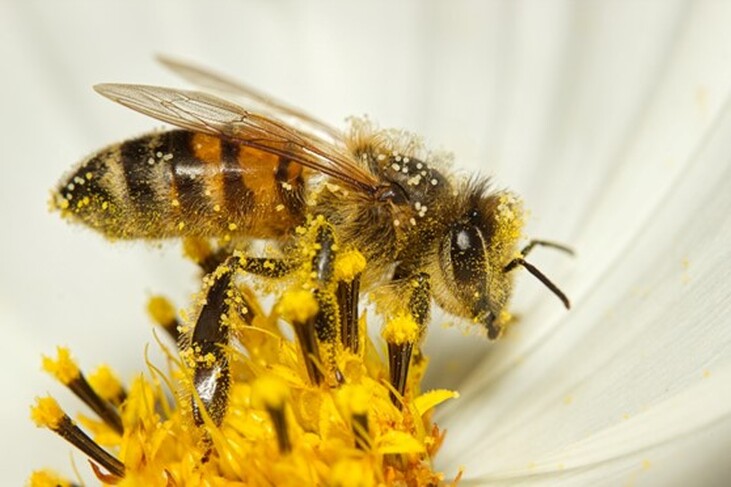
Why are pollinators important? Because they assist in spreading the plant part called pollen, which often looks like orange or yellow dust, from flower to flower allowing fruits and seeds to develop. People and wildlife depend on the pollination for food. Did you know that about one third of the food we regularly eat depends on pollinators for successful production? If you and your family like to eat apples, blueberries, cucumbers, cherries, eggplant, okra, peaches, plums, strawberries, pumpkin, or squash, you have pollinators to thank for those delicious additions to our diet.

Pollination ensures future generations of fruit and seeds for food, plant survival, and adaptation to environmental conditions. Forest, prairie, and savannah natural communities depend on pollinators for survival, too.

Pollinator Conservation
- What are the most important steps we can take to protect and ensure the survival of pollinators? Here’s a list of some important actions we can take:
  • Protect pollinators by avoiding unnecessary pesticide use on plants.
  • If you have to use pesticides, read the label. It is the law!
  • Practice less tidy gardening in some of the out of the way parts of your property so that native bees and butterflies have habitat for nests and overwintering.
  • Plant flowering plants that feed bees, butterflies, and other pollinators. Plant host plants that feed the larva (caterpillars) so they can turn into butterflies and moths.
  • Share your pollinator knowledge with children, grandchildren, neighbors, and friends

Want more information on pollinators? Here are some events, resources, and activities to help you learn more:
  • Pollinator Festival, Saturday, June 24, 9:30am to 11:30am, St. Paul’s Community Garden, 3601 Sterling, Independence, MO, 64052. (Rain-out date is Sunday, June 25; 2:00-4:00 p.m.)
This free family-friendly event is designed Paul’s Community Garden Manager if you have questions- 816-356-6986.
  • University of Missouri Extension Master Pollinator Steward Program- https://extension.missouri.edu/programs/master-pollinator-steward
 
Master Pollinator Steward Program publications are available as free downloads to individuals- https://extension.missouri.edu/publications/m405

  • Monarch Watch- https://monarchwatch.org/  Information on Monarch butterfly conservation
 
  • Xerces Society- https://xerces.org/  Information on conservation of invertebrates, including insects, and their habitats.


·Master Gardeners of Greater Kansas City Hotline-Call or Email Your Home Gardening Questions816-833-TREE (8733) – 24 hour voice mail. Email: [email protected]
(Please include your county, phone number and any pictures that would help Extension Master Gardener volunteers assist you in answering your questions.)
Picture
Bee covered with pollen grains. Image by Michael Reichelt used with permission from Pixabay
Picture

Rhubarb- Sour, Sweet, and Nutritious

5/25/2023

 
by Bethany Bachmann, Field Specialist in Horticulture, [email protected]
Additional information from Dr. Trinklein, MU Adjunct Professor, and Cathy Bylinowski, MU Horticulture Instructor, [email protected]

 
Rhubarb is in season May to June in Missouri. It is rich in vitamin K which helps in blood clotting and bone formation. Rhubarb also contains vitamin C.
​
How to Grow Rhubarb-
Spring is a good time to plant rhubarb, a perennial vegetable that favors cool weather. It produces large leaves attached to succulent stalks or petioles that grow from short, thick underground rhizomes.

Rhubarb is a full-sun plant that needs at least six hours of direct sun each day. Since it favors cool weather, rhubarb benefits from some afternoon shade in Missouri. It does not grow well in most of southern Missouri because of higher summer temperatures.

It tolerates a variety of soil types but prefers those high in organic matter. Like most perennial plants, rhubarb needs excellent drainage. Do not grow rhubarb where water will stand at the base of the plant or in soils with high clay content. Garden beds with composted manure and other forms of organic matter improve poorly drained soils and create ideal growing conditions for rhubarb.

Add about 2 to 2.5 pounds of a complete garden fertilizer such as 10-10-10 per 100 square feet of garden area at the start of growing season. A light side dressing of a fertilizer high in nitrogen or application of 2-3 inches of compost or manure after harvest also helps rhubarb stay healthy.

Crown divisions of rhubarb become available in the spring at garden centers, nurseries, and from online nursery catalogues.

Plant rhubarb in a shallow trench. Each dormant growing point, or bud, should be about a half-inch below the soil’s surface. Mature rhubarb plants are large. Space plants 2 to 3 feet apart in rows separated by at least the same distance. Firm the soil around the crowns, then water. Keep plants uniformly moist during establishment and avoid overwatering. Do not harvest rhubarb the first year.

Do not use rhubarb leaf blades for cooking. They contain oxalic acid, which crystallizes in the kidneys. Only the leaf stalks of rhubarb can be eaten safely.

Harvest from healthy rhubarb plants lasts about two months. To harvest, grasp the leaf stalk near its base and pull it to one side while twisting the stalk. Since cuts encourage crown rot, avoid harvesting rhubarb with a knife. Remove the toxic leaf blade soon after harvest. Refrigerate in plastic bags and use the stalks within five to seven days or freeze. Frozen rhubarb lasts about one year.

Remove flower stalks when seen. This forces the plant to put its energies into the leaves and roots instead of flowers and seeds.

Selection of stalks for cooking-  Choose stalks that are firm and crisp. Avoid wilted or very thick stalks which can be woodier than others. Unwashed rhubarb should be wrapped with a paper towel and stored in the crisper drawer for best results. Rhubarb stalks can last up to three weeks stored in this manner.

Recipe of the Month
Some people love the sour flavor of rhubarb, as in the recipe below. Others like to combine rhubarb with other fruit, such as strawberries, to lessen the intense sour flavor. You can experiment and see what you like the best.

Rhubarb Muffins
Ingredients:
  • 1 cup all-purpose flour
  • 1 cup whole wheat or almond flour
  • ¾ cup granulated sugar
  • 2 ½ tsp baking powder
  • ¾ tsp cinnamon
  • ½ tsp salt
  • 1 cup plain Greek yogurt
  • 8 Tbsp melted, unsalted butter
  • 2 large eggs
  • 1 tsp vanilla extract
  • 1 ½ cups rhubarb, cut to ¼ inch pieces
Directions:
1. Preheat the oven to 400 degrees Fahrenheit. Line a muffin tin with paper liners.
2. In a large bowl, combine the dry ingredients with a whisk.
3. In another bowl, mix the yogurt, butter, eggs, and vanilla until smooth. Add to the flour mixture and stir until just combined. Gently fold in the rhubarb.
4. Divide batter evenly among muffin cups. If desired, sprinkling tops of each with sugar.
5. Bake until golden brown, about 20 minutes.
Picture

MARC offers opportunity to mow your way to cleaner air with new rebate program

4/13/2023

 
     The Mid-America Regional Council is working to reduce air pollution through the new Mow Electric lawn mower rebate program. Mow Electric works to reduce air pollution from gas-powered lawnmowers by recycling and replacing them with electric mowers. The shift from gas to electric mowers will result in a reduction in harmful emissions, like ozone, typically brought on by gas mowers.
     Gas-powered lawnmowers are major pollution producers and can be harmful to our air and health. Alternatively, electric mowers are carbon neutral and give off zero emissions, resulting in cleaner air and lower ozone levels. They get the job done like a gas-powered lawn mower – and in a sustainable manner. There’s no need to fear about running out of power because an electric mower battery will run anywhere from 45 minutes to 1 hour and can last up to 5 years or 500 charging cycles. 
     Ready to start mowing your way to cleaner air? The steps are easy:
  • Come to one of the three participating Westlake ACE Hardware stores on April 29 to receive your rebate. Visit AirQKC.org for participating store locations.
  • Bring in your gas-powered mower for recycling and fill out an application. 
  • Purchase your new electric mower to receive your $50 rebate. 
     Rebates will be distributed on a first-come, first-served basis. 
     To learn more about the swap-out events and participating ACE Hardware locations, visit the AirQ website. To share any questions or comments, email [email protected]. Rebates are paid in part by the Kansas Department of Health and Environment.

Picture

​3 Ways to Prep Your Home for Bug Season

4/13/2023

 
     (StatePoint) It can be tempting to think that bugs simply disappear in the cooler months. The truth is that many bug species have evolved to survive all year long, sometimes hiding in the warm nooks and crannies in and around homes. Others go into a hibernation-like state.
     “Bugs can be a lot smarter and more resilient than you may realize. Even if you don’t see household pests right now, some may still be waiting in your home for those first warm days to signal them to become active, search for food and find a mate,” says Emma Klingman, senior products research at Zevo, a maker of pest control products with naturally-inspired ingredients you can feel good about.
     To prep your home for bug season and outsmart pests, follow these three steps:

     1. Tidy up: Household pests love snacking just as much as people do, but you don’t need to play host to them. After meals, wipe down tables, counters and other kitchen surfaces. Be sure to regularly sweep and vacuum crumbs, as well as mop up to eliminate sticky food residue. Keep a tightly-fitting lid on your garbage bin, and rinse cans and jars before recycling them.

     2. Be ready: Even an immaculate home will face pest problems at some point. That’s why it is important to have tools on hand to catch a problem early, before it becomes a much bigger one. Zevo’s Instant Action sprays target and shut down biological pathways found in insects, not in people or pets. Likewise, the brand’s traps use a UV and blue light system to attract and capture flying insects, and they have a discreet design that can serve as a bouncer at your home’s entry points. It’s also smart to use these traps in potential problem areas, such as near trash cans and fruit bowls and near toilet bowls and drains.

     3. Safeguard the yard: Defending your yard from pesky pests will not only improve the comfort of your home’s outdoor spaces, it will help prevent insects from finding their way indoors. Be sure to eliminate standing water by properly tending to your lawn and by periodically clearing downspouts of debris. Any water feature in your garden should use running water. If you have a patio or deck, consider screening it in. If you don’t love the look of screened walls, installing ceiling fans can be an effective alternative. Run the fans whenever you entertain to deter unwanted guests, such as mosquitos, from crashing the party.
     Of course, it’s always a good idea to apply bug repellant when spending time outdoors. Find a formula that will be easy to use, such as the new on-body products from Zevo, which include a pump spray, aerosol and lotion. They offer eight hours of protection from mosquitoes and ticks and are lightweight, odorless and not sticky.
     For more usage tips and more information, visit https://zevoinsect.com and follow on Facebook, TikTok and Instagram (@ZevoInsect).
     “As we usher in gorgeous spring weather, it can be an especially challenging time of year to keep bugs at bay at home. But with the right tools and strategies, you can help prevent and combat infestations as they arise,” says Klingman.

Picture

April Gardening

4/6/2023

 
by Cathy Bylinowski, M.S. Horticulture, Horticulture Instructor
University of Missouri Extension- Jackson County, MO


     Spring is here. If you are interested in gardening outdoors, now is the time to start.

     Cool Season Vegetables
, those that thrive in cooler temperatures can be sown into moist, crumbly garden soil now. Follow the planting information on the seed packet or use the MU Extension Vegetable Planting Calendar for successful planting:
     Arugula- A nutty flavored salad green when it is young and tender; as the plants get older and the temperatures start to rise, the leaves become spicy hot. They are still good for stir fry dishes.
     Beets- Wait until temperatures are above freezing to plant. Thin seedlings to 1-2 inches apart.
     Carrots- Plant carrots seeds as soon as garden soil is workable. Seedlings take two weeks to germinate. Thin to at least 1 inch apart.
     Collards- Some gardeners prefer to purchase transplants of collards, but you can direct sow seeds in the spring.  If you keep the pests off the collards, you should be able to harvest leaves until a hard freeze.
     Kale-  Improved Dwarf Siberian Kale, a hardy cold tolerant variety with curly leaves, is a nutritious crop that can be directly sown. The plants continue to produce edible leaves throughout the growing season. It is also a great fall crop.
     Mustard Greens- Do you like mixed greens? If you do, mustard greens are an essential ingredient. There are broad leaf and curly leaf varieties. It loves cool spring or fall weather, but bolts (goes to seed) in warm weather.
     Onions- During April, you can plant onion sets, which are small bulbs, or onion plants. Be sure to plant onion sets with the pointy end of the bulb up and the fuzzy root end in the soil. Plant 1-2 inches deep.
     Potatoes- Plant seed potatoes as soon as possible this month. Plant quarters of larger seed potatoes with eyes (small indentations where sprouts will grow) or entire smaller seed potatoes, 3-5 inches deep in furrows and 1 foot apart. Some gardeners like to rake soil around the base of the potato plant to keep the tubers from turning green. You can harvest early potatoes and leave the green plant to continue growing. And, you can harvest potatoes after the plant has died back. Consult MU Publication Vegetable Planting Calendar and MG5- the Vegetable Gardening Chapter of the Missouri Master Gardener Core Manual for more information. 
     Radishes- Radishes are another cool season crop that should be planted as soon as possible this month. If planted and harvested too late, they will get too hot to eat. They also will start going to seed as soon as the weather warms up. Radishes can be planted in the fall, too.
     This is a short list of spring vegetable crops.  Seed catalogues, the MU Extension Vegetable Planting Calendar, and gardening friends are sources of information on more spring crop possibilities.
 
  
Cool Season Flowers-
     Pansies and Violas- While it is too late to start these flowers from seed now, transplants of these lovely flowers can be purchased. Both will flower until early summer. The plants wither during summer heat. Careful watering, as well as shade from surrounding plants may allow pansies and violas to survive until fall when they might bloom again.
     California Poppies- These small yellow and orange cool season annual flowers are easy to grow from seed. They are native to the western United States. They do well in full sun, poor soil and droughty conditions. If allowed to flower and go to seed, they can reseed themselves the following year.
     Bachelor Buttons- These hardy, cool season annual flowers are also called corn flowers. They come in a range of colors from white to dark blue. The light blue varieties are perhaps best known. Seed for Bachelor Buttons can be planted now in prepared soil. They prefer full sun. They will flop over if planted in too much shade.
​
     For more information about cool season vegetables or flowers, contact MU Extension Horticulture Instructor Cathy Bylinowski, [email protected] or Master Gardeners of Greater Kansas City Hotline at 816-833-TREE (8733). 
Picture
Red Radishes, Image by Matthias Böckel from Pixabay 
Picture

MDC urges public to leave wildlife wild this spring

4/6/2023

 
by Jill Pritchard, Missouri Department of Conservation 
     As you head outdoors this spring to enjoy the warmer weather, it’s likely you’ll encounter a variety of newborn animals. Young wildlife can pull on our heartstrings as they appear to be abandoned, but that’s rarely the case. The Missouri Department of Conservation (MDC) reminds the public that interfering with wildlife does more harm than good.
     According to MDC State Wildlife Veterinarian Sherri Russell, young animals are rarely orphaned.
     “When we see newborn wildlife alone, that means the parents are likely out searching for food and will return,” Russell explained.
     A common newborn species people can come across in the spring season is young birds.
     “If you see a chick with feathers hopping on the ground, leave it alone because it’s a fledgling and the parents are nearby keeping watch,” said Russell. “Fledglings can spend up to 10 days hopping on the ground learning to fly. If you find one that has no feathers, you can return it to the nesting area if possible, as it likely fell out of its nest.”
     Russell also warned against “rescuing” newborn rabbits.
     “Rabbits seldom survive in captivity and can die of fright from being handled,” she said.      “Even if the animal is injured, it’s best to return it to the nest because the mother will most likely return.”
     Human scent does not cause wild mothers to reject their young, and most newborn animals do not survive in captivity.
     “It takes a lot of knowledge to care for and rehabilitate wild animals,” stressed Russell. “It requires special training, permits, and facilities. Not to mention, it’s illegal to possess many wild animals without a valid state or federal permit.”
     Russell also noted wildlife can become dangerous as they mature, and can carry disease, parasites, and cause property damage.
     “We know people have good intentions, and it can be tempting to take these cute, young animals in our homes, but the best thing we can do for wild animals is to leave them be,” she said.
     To learn more about Missouri’s native wildlife, visit the MDC online Field Guide at https://nature.mdc.mo.gov/discover-nature/field-guide/search.
Picture
You may encounter a variety of newborn animals this spring, such as cottontail rabbits (pictured). MDC encourages the public to leave wildlife alone as attempting to help them can do more harm than good. Photo credit: MDC
Picture

MDC recommends native trees for early spring blooms in the Kansas City region

3/30/2023

 
by Bill Graham, Missouri Department of Conservation 
      They bloom in early spring with white or lavender flowers, and they provide food and shelter for songbirds and butterflies. Native trees such as service berry and redbud benefit wildlife and add color to home and business landscaping, said Taylor Neff, MDC community forester. Neff and other MDC foresters recommend early blooming native trees and urge homeowners and landscape services to avoid planting non-native trees such as the invasive Callery pear cultivars.
     Profusely blooming Callery pear varieties do provide a brief burst of spring color, but they also pose problems, including becoming an invasive enemy to native plants.
      “They spread across natural areas and crowd out beneficial native species, Neff said.
     Callery pear varieties are seen blooming during spring in yards and in front of businesses because they have long been planted as an ornamental for landscaping. But they have escaped into forests, woodlands, pastures, parks, and right of ways where they are not wanted. Fast growing, they shade out native plants that also offer beauty and provide more benefits for wildlife. Callery pear varieties host few of the insects that birds depend upon as food. Birds do eat their berries, but that spreads the seeds and furthers the invasion.
     Callery pear cultivars planted as ornamentals have hybridized and become very invasive. Cultivated varieties of this plant available for sale include Aristocrat, Autumn Blaze, Bradford, Capital, Chanticleer (also known as Cleveland Select), New Bradford, and Redspire, among others. All are invasive and should not be planted. Individual cultivars are considered self-sterile but different cultivars planted near each other can cross-pollinate and produce fruits and viable seed. 
     Besides being invasive, the Callery pear varieties have drawbacks in landscaping use.
     “They commonly have a poor, multi-stemmed structure which leads them to break easily from wind, ice, and snow,” Neff said. “They can require a lot of maintenance.”
     Callery pear varieties are also fast growing, she said. This, paired with the poor structure, often means they are trimmed annually, rather than a more normal three-to-five-year pruning schedule you see with native species.
     Native trees that make good ornamentals are available, including spring blooming varieties. Missouri’s state tree, flowering dogwood, provides white blooms and is attractive in lawns if given shady locations. Serviceberry provides early white blooms but also red berries that are edible for people and songbirds. Other blooming choices include red buckeye, yellowwood, redbud, blackhaw viburnum, hophornbeam and chokecherry. A mix of tree species will provide a variety of blooms and benefits. Native trees host valuable insects that are important food sources birds, and they host the caterpillars for butterflies and moths.
     For more information about problems from Callery pear trees and how to remove or control them, visit   https://short.mdc.mo.gov/4MJ. A good source of information about native plants and trees for landscaping is available at http://www.grownative.org. To learn about an upcoming Callery pear buyback program in the Kansas City area sponsored by Deep Roots KC, visit https://short.mdc.mo.gov/4M3.
Picture
Serviceberry with white spring blooms and redbud with lavender blooms are natives that add color to landscaping. Photo credit: MDC
Picture

Spring Vegetable Gardening

2/16/2023

 
by Cathy Bylinowski, M.S. Horticulture, Horticulture Instructor
University of Missouri Extension


     It might be hard to believe now, but the cold winter weather will be over in the weeks to come. It is time to start thinking about spring vegetable gardening!
     Begin the garden season with some planning. You can use the MU Extension Vegetable Planting Calendar to help guide you to success: https://extension.missouri.edu/publications/g6201
     This publication will help you know what to plant when and other helpful gardening planning information.
     If you want to start your own cabbage, broccoli, cauliflower, or Brussels sprouts transplants, now is the time to begin. These cold tolerant cole-crops (cabbage-related crops) take about 5-8 days to germinate when in a warm (75-77 degrees) conditions.
     As soon as they germinate, move the seedlings to a well- lit location. You will need a sunny south window, fluorescent lights set up on shelving units to create a bright propagation area, or a greenhouse. Seedlings that do not get enough light, get too tall and often fall over. They will not mature into plants that produce good crops.
     If you do not have adequate light to start your own transplants, you can wait and purchase cabbage, broccoli, Brussels sprouts, and cauliflower transplants at garden center stores soon. In Central Missouri, transplants for cole-crops can be planted outside in a sunny spot in the vegetable garden, from mid-March through mid to late April.
     If temperatures  below freezing are predicted, you can cover them with newspaper, sheets of plastic, even bed sheets overnight for protection. Or you can cover the plants with floating row cover that can be kept on the plants to help keep insect pests out. Floating row cover is a spun polyester fabric that lets light and rain in and creates a microclimate underneath next to the soil that is several degrees warmer than the outside temperatures.
     When the snow and ice melts, and garden soil is moist and crumbly, you can direct-sow cold tolerant crops such as arugula, lettuce, radishes, and sugar snap peas outside. Onions are a good spring crop, too. They will be available at garden centers in early spring, as onion sets, which are small onion bulbs, or as onion plants.
     Early spring is also a great time to plant ornamental cabbage and kale, pansies, and violas. These visually attractive plants love the cool weather and can be planted along flower bed borders, among the vegetables, and in containers. They will provide a wide range of color until the temperatures get hot in late June and July.
     Do you have more gardening questions? The Gardener Hotline is another way to get reliable gardening information. It is staffed by trained Extension Master Gardener Volunteers of Greater Kansas City. The phone number is 816-833-TREE (8733).  You can also email gardening, landscaping, and other horticulture questions to them at [email protected].
     Also, feel free to contact Cathy Bylinowski, MU Extension Horticulture Instructor, [email protected], if you have more gardening questions or need more information on MU Extension Horticulture programs. 
Picture

MDC offers free virtual class Feb. 25 on designing a native plant landscape garden

2/9/2023

 
by Bill Graham, Missouri Department of Conservation 


     Having a good planting plan can help gardeners develop a native plant garden that meets their goals. The Missouri Department of Conservation (MDC) will offer a free virtual DIY Native Landscape Design class from 10 to 11 a.m. on Saturday, Feb. 25. This online course will help gardeners make choices about what species to plant and how to design their placement for a successful garden.
     Native wildflowers and grasses can provide year-round color and texture. They’re adapted to Missouri’s soils and climate, and once established, maintenance can be more minimal than for non-native plants. Plus, natives better serve songbirds, pollinating insects, and wildlife. Thoughtful species choices can also provide a series of wildflower blooms from spring into autumn. Native prairie grasses provide backdrops in summer, golden-red color in autumn, and interesting patterns in winter.
     Late winter is a good time to prepare for spring planting. Cydney Ross, MDC native landscape specialist, will provide suggestions and talk about how selecting the right plants and designing with intent can help a gardener achieve the colors and patterns they seek. A backdrop for the class will be the extensive native plant garden at the Anita B. Gorman Discovery Center in Kansas City, where Ross is based. That garden showcases how natives can be used in landscape designs.
​     The DIY Native Landscape Design class is open to participants ages 18 and older. Registration is required. To register, visit https://short.mdc.mo.gov/4Y4.
Picture

Take poinsettia off Santa's naughty list

12/8/2022

 
by Linda Geist, University of Missouri Extension

     A century ago, poinsettia was added to Santa’s “naughty” list, but the plant’s reputation for being poisonous is unfortunate, says University of Missouri Extension horticulturist David Trinklein. Its pretty bracts and leaves pose no danger to people and pets, other than possible allergic reactions.

     The myth that poinsettia is toxic can be traced back to a 1919 incident in Hawaii involving the death of a 2-year-old child, presumably after eating poinsettia leaves. Later, it was revealed that the child died from other causes and poinsettia was not involved. However, the damage to poinsettia’s reputation was done and word of its toxicity spread quickly.
     “You cannot un-ring a bell,” Trinklein said. “Once a myth gains traction, dispelling it becomes quite a challenge.” Modern-day media unfortunately often continue to include poinsettia on lists of toxic holiday plants, he said.
     In a 1971 study funded by the Society of American Florists, scientists at Ohio State University fed lab rats “extraordinarily high doses of various portions of the poinsettia.” A human would have to devour several pounds of poinsettia to get an equivalent dose. Yet the rats appeared to be fine. Scientists observed “no mortality, no symptoms of toxicity nor any changes in dietary intake or general behavior pattern.”
     In the 1990s, researchers at Carnegie Mellon University in Pittsburgh analyzed almost 23,000 cases of poinsettia ingestion reported by poison control centers. More than 92% of patients showed no ill effects at all, and no one died or became critically ill.
     However, Trinklein notes that poinsettia’s sap, which has several proteins in common with natural latex rubber, can cause allergic skin reactions. Therefore, the plants should be kept out of the reach of children.

Of bracts and cyathia

     Poinsettia remains the nation’s top-selling potted flowering plant. The fact they are sold only in a narrow span of time between Thanksgiving and Christmas is testimony to Americans’ admiration for the plant, Trinklein said.
     The colorful part of the poinsettia that we enjoy isn’t a flower. What look like petals are specialized leaves called bracts. The true flowers, called cyathia (from the Greek for “cup”), are the small, yellow structures in the center of the bracts.
     When choosing a poinsettia plant, look closely at the cyathia. Their presence indicates the plant is still young. If the cyathia are missing, it’s likely the plant is past its prime.
     Also, check leaves and bracts for wilting, which could indicate root problems, Trinklein said. Examine the underside of the leaves for insect infestation or damage.

Sun, little water

     Proper care helps the poinsettia stay vibrant throughout the holiday season. Two things are key: Place them in bright, indirect light and avoid overwatering.
     If your plants came wrapped in decorative foil, make sure there’s a hole in the foil so water can drain. Water if the pot feels light when you pick it up. If the soil’s surface is clammy or moist to the touch, wait to water. Fertilizer and plant food are unnecessary.
     Poinsettia plants can bloom another holiday season for those up to the challenge, said Trinklein. For information on how to save and rebloom a poinsettia plant, visit- 
https://extension.missouri.edu/news/poinsettias-can-bloom-again-next-year-with-tlc-2966

Picture
The poinsettia's small flowers are surrounded by colorful leaves called bracts. Photo by Scott Bauer, USDA Agricultural Research Service.
Picture

7 Tips to Prepare Your Home for Holiday Guests

12/8/2022

 
     The holiday season is here, and homes everywhere are filling up with friends and family. But things like clogged drains, burned out light bulbs, leaking toilets, unwelcome guests like mice, and slick sidewalks are a fact of life – and it can happen at the worst times. Westlake Ace Hardware suggests these simple tips and products to keep on hand to make household repairs quick and simple – and let you get back to enjoying the holidays!
  1. Give your walk a clean sweep – Sweep, shovel, or use a leaf blower on walkways before guests arrive so they won’t accidentally slip or pick up debris on their shoes to track through your home. If the walks are icy, apply ice melt.
  2. Light it up – Buy a supply of energy-efficient LED light bulbs that shed a softer light and show true whites inside a home. Also, consider adding a nightlight to bathrooms or dark hallways so guests can find their way in an unfamiliar space at night.
  3. Take a shower in the guest bathroom – Test shower heads you never use to make sure the water pressure is up to your standards. If not, consider soaking the shower head in CLR or a mixture of vinegar, baking soda, and water to remove mineral deposits. If that doesn’t help, it’s a quick fix to replace the showerhead with a new one.
  4. Banish bathroom blunders – The time for a bathroom emergency is NOT while you have a house full of guests. Check your house’s bathroom sinks, faucets, and toilets in advance. Tighten leaky faucets, clear drains of clogs, and fix the toilet valve or flapper if it’s continually running or not filling properly. If you don’t already have a plunger and sewer snake on hand, those can be invaluable tools. Insta-Flow is a great way to quickly unclog sinks.
  5. Freshen the air – Replace the furnace filter so the air inside your home doesn’t smell dusty and stale. If the air inside already feels dry, consider purchasing a humidifier to add moisture to the air for everyone’s comfort.
  6. A touch of fresh paint – Starting a major renovation is not advised during the holidays, but it can be a good time to paint over chips and nicks on doors, door frames, cabinets, and baseboards. Just be sure to leave several days for the paint to dry before guests arrive.
  7. Uninvite unwanted furry guests – Unwanted guests like mice and rats may try to make their way into your home to escape winter’s cold and enjoy the warm and dry environment. 
    • If your fireplace wood is stacked right next to the house, consider moving it away from the foundation and outer walls. 
    • Minimize clutter in the garage so pests can’t find places to nest. Keep tight-fitting lids on trash cans.
    • Rinse recycling items before tossing in the bin to avoid tempting rodents with food remnants. If you’re storing dog or cat food in the garage, make sure containers are sealed tight. And keep the garage door closed to prevent rodents from walking right in. 
    • An adult mouse can squeeze through a dime-sized hole, so seal off all possible access points throughout the house with steel wool. 
    • Bait stations are a good option for basements, garages, attics, and other tight spaces. Rodents eat the product then wander off to meet their end. Bait stations can be disposable or refillable. While bait is highly effective, it should not be used in high-traffic areas or around pets. 
    • If you’d prefer a non-toxic, poison-free option, the Victor PestChaser Plug-In Electronic Rodent Repeller drives away rodents by emitting a highly irritating noise that only rodents can hear.  
Picture

Using Fireplace Wood Ashes in the Garden

11/24/2022

 
     by Kelly McGowan, MU Extension Field Specialist in Horticulturist in the Southwest Region

      Nothing is cozier than a wood burning fireplace on a cold winter night. Once that fire is gone, ashes make a great soil amendment and have been used by gardeners for generations. Ashes are a good source of plant nutrients, especially calcium. While the calcium is good for plant health, it can work similarly to lime and effect soil pH, the acidity, neutrality, or alkalinity, of the soil. Excessive use of wood ash can lead to a pH above the ideal level, which in turn can affect nutrient availability.
     It can also increase levels of phosphorus and potassium to high levels. Be careful to not over apply and soil test every one to two years to monitor soil fertility and pH. It is easy to get too much of a good thing! The recommended amount is five to ten pounds per 100 square feet.
     Ash can be applied pre-planting and incorporated in the soil, or used as a side dressing around growing plants. Store unused ashes in a dry place. If stored outdoors, the weathering process can decrease its nutritive value.
     Make sure to only use wood ash and never ashes from burning trash. Trash burning ashes contain toxins that are undesirable in the vegetable garden. Also, keep in mind that wood ash is highly alkaline, so wear a dust mask and other protective equipment when handling to prevent inhaling or getting into your eyes.
Picture
<<Previous
Forward>>

    RSS Feed

    Categories

    All
    5 Questions
    Arts
    Beacon: Missouri
    Best Of Grain Valley
    Burton Kelso
    Business
    Cathy Allie
    Celebrations & Transitions
    Census
    City Of Grain Valley
    Civics 101
    Columnists
    Community Profile
    Covid-19
    Covid19
    David Burton
    Day Trippin'
    Downtown Grain Valley
    Dr. Bug
    Economic-development
    Education
    Elections
    Financial Health
    Fitness
    Food Inspections
    Good News
    Good-news
    Grain-valley-assistance-council
    Grain Valley Fair
    Grain Valley Historical Society
    Grain-valley-partnership
    Grain Valley Schools
    Health And Fitness
    Health-and-fitness
    Heatlh
    Home And Garden
    Jackson County
    Kansas City Royals
    Kindness Awards
    Ld
    Letters
    Local News
    Looking Back
    Lorne-meinershagen
    Missouri House Of Representatives
    Missouri Independent
    Missouri Senate
    Musings From The Middle
    Neighborhood View
    On-the-job
    Pets
    Police Blotter
    Public Notice
    Quick-news
    Rdn
    Recreation
    Sally-whitaker
    Scene In Grain Valley
    Seniors
    Senior-send-off
    Sports
    State Of Missouri
    Summer Fun
    Sunshine Week
    Technology
    The Beacon
    Tracey-shaffer
    Transportation
    University Of Missouri Extension
    Waynes-world

    RSS Feed

    Archives

    November 2025
    October 2025
    September 2025
    August 2025
    July 2025
    June 2025
    May 2025
    April 2025
    March 2025
    February 2025
    January 2025
    December 2024
    November 2024
    October 2024
    September 2024
    August 2024
    July 2024
    June 2024
    May 2024
    April 2024
    March 2024
    February 2024
    January 2024
    December 2023
    November 2023
    October 2023
    September 2023
    August 2023
    July 2023
    June 2023
    May 2023
    April 2023
    March 2023
    February 2023
    January 2023
    December 2022
    November 2022
    October 2022
    September 2022
    August 2022
    July 2022
    June 2022
    May 2022
    April 2022
    March 2022
    February 2022
    January 2022
    December 2021
    November 2021
    October 2021
    September 2021
    August 2021
    July 2021
    June 2021
    May 2021
    April 2021
    March 2021
    February 2021
    January 2021
    December 2020
    November 2020
    October 2020
    September 2020
    August 2020
    July 2020
    June 2020
    May 2020
    April 2020
    March 2020
    February 2020
    January 2020
    December 2019
    November 2019
    October 2019
    September 2019
    August 2019
    July 2019
    June 2019
    May 2019
    April 2019
    March 2019
    February 2019
    January 2019
    December 2018
    November 2018
    October 2018
    September 2018
    August 2018
    July 2018
    June 2018
    May 2018

Grain Valley News

This work by Grain Valley News is licensed under CC BY-NC-ND 4.0

Contact Us

PO Box 2972
​Grain Valley MO 64029

Privacy Policy
​
(c) 2025 Grain Valley News
  • Home
  • About
    • Contact
  • News
  • Community
    • Best of Grain Valley