
|
As we transition into the New Year, many of us embark on a journey of self-improvement and set resolutions aimed at achieving a healthier lifestyle. New Year's resolutions are an opportunity for personal growth. Hy-Vee dietitians are here to help guide you in forming new habits and staying on track with your health and wellness resolutions this New Year. Whether you are focusing on dietary changes, implementing exercise, or just overall well-being, our team is dedicated to supporting you throughout your journey toward a healthier, happier you! With expert advice and personalized guidance, I aim to make your resolutions a seamless part of your lifestyle, ensuring that the positive changes you implement become long-lasting habits. As you get started this New Year I want to share a few of my top tips when it comes to setting your goals and managing your resolutions.
I am here to help you navigate those New Year’s resolutions. Whether we meet in person or virtually, we can find the best solution to help you achieve your goals! To get started I recommend scheduling a Discovery Session. During this complimentary session we can discuss your health and wellness goals and I will walk you through available services designed to help you meet those goals. Or if you already know that increasing your physical activity is your game plan this New Year, I recommend signing up for our Move More Challenge. During this 4-week challenge we will help motivate you to be active with weekly tips and movement inspiration. Each week you will track if you met the goal of 150 minutes of intentional movement. Complete the challenge for a chance to win incredible prizes! I want to thank our sponsors — Chosen Foods Avocado Oil and Perfect Snacks. Find out more about our Move More Challenge or get started with Hy-Vee dietitian services by scheduling your complimentary Discovery Session today. Simply head to https://www.hy-vee.com/healthnew/dietitians. We look forward to connecting with you this New Year! The information is not intended as medical advice. Please consult a medical professional for individual advice. 
The New Year is here and I'm sure most of you have already decided on your resolutions. A fresh start is what many of you are looking for in 2024, so when you resolve to make positive changes to your personal life, take a moment to make some resolutions for your digital life as well. Just like good personal habits help you live a longer and fuller life, good tech habits help your technology last longer and prevent you from falling victim to many of the scams out there that threaten your tech devices and your data. There are so many habits you should pick up when it comes to using your technology. Here are some important ones you need to use in the coming year. Get on Board with AI. Generative tools like ChatGPT and Midjourney took over the tech space in 2023 and their popularity will increase in 2024. These tools are essential replacements for standard web searches like Google allowing you to find information in one search rather than scouring the Internet for information. This is helpful if you need ideas for starting a business to helping your kids with homework. They also allow you to create websites, and PowerPoint slides and get help for anything home and work-related. Get started by downloading the ChatGPT app and use it rather than Google and watch your digital life transform. Build Your Human Firewall. Cybercrime is a human problem. Every device you own such as your smartphone, computer, and other gadgets is safe from hacks, however, if you accidentally click on a link in an email or text message, all of your systems can get compromised. By doing things like using 2-factor authentication for all of your online accounts, using a password manager, rather than trying to remember all of your online account credentials, and using passphrases rather than passwords, criminals will never get access to your devices. Sign up for a Technology Services Plan. In this day and age, technology is always changing which can make your digital lifestyle complicated. To ease that technology stress and confusion, you should sign up for a managed services plan for your home or business. Most tech support services plans can monitor all of your devices to give you a heads up if you have a device failing and they can provide 24/7 phone and remote tech support to help you solve problems with your smart home, smart TV, and any other device in your home and office. Configure Your Devices to Automatically Backup to a Cloud Storage Service. You can easily replace your computers, smartphones, and tablets. Your data, such as baby's first photos, wedding pictures, and holiday videos, can't be replaced when lost. Even if there was a chance to reclaim those old files it could cost thousands if you let us at Integral attempt to retrieve them from you. External hard drives can be used for backup, but most of you won't remember to plug them into your devices to have them back up. Resolve this year to have your devices automatically back up that information to the cloud. Unfortunately, there are no free services that allow you to do this, but most backup services average around $70 a year which is a small price to pay for the peace of mind knowing your files are safe and secure. Not sure what to use? Windows and Macintosh Computers: Carbonite (www.carbonite.com) will automatically backup your items to the cloud and keep older files for up to 30 days. iPhones and iPad: iCloud. (www.icloud.com) Apple starts you off with a small amount of storage for your tech devices, but for a small monthly fee, you can increase that storage to backup all of your important files on your iPhone, iPad and even your iMac and Macbook. Android Phones and Tablets: Google Drive. (www.google.com) Google follows the same model as Apple by giving you a free amount of storage space, but for a small monthly fee you can have all of your Android devices and your Windows and Apple computers backed up to the cloud. Use a Password Manager to Store Those Passwords. Hopefully, you're using different passwords for all of your online accounts. If you're not, you're risking identity theft and having your online accounts compromised. Cybercriminals are using a method called Credential Stuffing to get access to your information. With all of the data breaches that have occurred over the years, the is a good chance your user information is sitting on the dark web. Once your information is obtained, a criminal just needs to use your credentials to log in. Making sure you have a different password for each of your online accounts is a great deterrent. Keeping track of all of those passwords is the challenge, which is why a password manager is a good tool for you to use. Not the most secure method, but storing those passwords in your favorite browser is better than using the same passwords for your accounts. Edge, Safari, Chrome, Firefox, and Opera all offer an option to store your passwords. If you want a little more security, use LastPass (www.lastpass.com) or DashLane (www.dashlane) to store those passwords. Have a Good Balance between Screen Time and Real Life. Technology has been a great tool during the pandemic allowing us to stay in contact with family and friends, but if you've seen "The Social Dilemma" on Netflix, you know technology is designed to keep you addicted and plugged. It's even worse for younger members of your family with social media creating a host of mental and physical ailments. iPhone users can take advantage of Apple's Screen Time to track and control their smartphone use. Android users can use Digital Wellbeing to set limits on the time you spend on your devices. It helps if you block or unfriend negative people on your social media accounts. Also, set certain areas in your home as 'no tech' zones to help curb the amount of time you spend staring at your devices. Implement a Disaster Recovery Plan Whether it’s a power outage, natural disaster, or cyberattack, numerous unexpected events can take your business offline. The most important thing in these instances is to have a plan to get back up and running as soon as possible. A good disaster recovery plan will help you feel prepared and calm when things go awry. Add a Little 'Green' to Your Tech. One of the great things about technology is all of the environmentally friendly tech that is available. Focusing on 'green' tech can help your home and office finances. The first thing you should do is replace your standard light bulbs with LED bulbs. LED bulbs can save you up to $6 a year. A small amount when you think of one bulb, but think about how many bulbs you have in your home or office. If you haven't already, you should also invest in smart home hubs like Amazon and Google that can control items like thermostats, locks, garage doors, and other items to help monitor your home and office devices to help with your energy savings. Some utility companies will provide them to you, but once you have one in your home or office, you can program a schedule to make sure there is no waste when it comes to your utilities. Hopefully, this will give you some ideas of how you can keep and make technology resolutions for your technology for the new year. If you have any questions, please don't hesitate to ask. Looking for More Useful Tips Tips? My Tuesday Tech Tips Blog is released every Tuesday. If you like video tips, I live stream new episodes of 'Computer and Tech Tips for Non-Tech People' every Wednesday at 1:00 pm CST on Facebook, 
When the holiday season rolls around, it’s not just Santa Claus that’s coming to town. Scammers, hackers, bots, and all sorts of other nefarious actors will always be around, waiting in the wings to take advantage of eager and ignorant consumers, travelers, and revelers. Beware, but do not fear! Here are some top tips to keep yourself, your loved ones, your data, and your finances safe and sound, enjoying the yuletide with concerns at bay. 1. Traveling with Technology. Turn on Find My Device to keep track of your gadgets as you're traveling. Stay off public Wi-Fi networks. Beware, many third-party power adapters are not made well and can cause problems with your device’s battery or power supply. Avoid exposure to extreme temperatures. If the device does become extremely hot or cold, let it return to normal room temperature before you turn it on. 2. Be careful when purchasing tech gadgets as gifts. There are tons of ads out there during the holiday season aiming to seduce you into buying new technological gadgets. Things like that fancy new smart razor for your husband; a sleeved blanket that pairs with your smartphone and glows in the dark; talking dolls, internet-connected coffee makers; and the list goes on. The biggest tip here is to pay attention to the brand. So many cutting-edge gadgets are poorly constructed or sacrifice quality for cheapness, many of them won’t even last until next Christmas. Only buy tech toys like these from brands you trust, and know that as a general rule, you get what you pay for. 3. Limit kids time on their devices. Schools are almost out for Winter which means your kids will want to spend more time on their tech devices. If at all possible, limit your kids to no more than 3 hours a day on their devices. No devices in their rooms and if you can make it work, connect their devices to a separate wireless network which you can turn off as needed. 4. Keep Tech in its Place. Probably most importantly, remember that the holiday season is a time of sharing, giving, love, and praise. Whatever you do, don’t let your technology take you away from those most precious moments with family and friends. You can use features on your phone like Do Not Disturb and Focus settings to suppress notifications and reduce distractions. You can set schedules and custom wallpapers to remind you to put your phone down. You could even disconnect completely and turn your phone off (don’t worry, you’ll be fine!). Technology has its uses, but when you are in the presence of loved ones, make sure the focus is where it should be. Hopefully this will give you some ideas of what you can do with you to be tech safe and productive during the holiday season. If you have any questions, please don't hesitate to ask. Need computer repair service near you? My company Integral offers the highest quality computer repair service nationwide. If you need on-site or remote tech support for your Windows\Macintosh, computers, laptops, Android/Apple smartphone, tablets, printers, routers, smart home devices, and anything that connects to the Internet, please feel free to contact my team. Our team of friendly tech experts organization can help you with any IT needs you might have. Reach out to us a www.callintegralnow.com or phone at 888.256.0829.  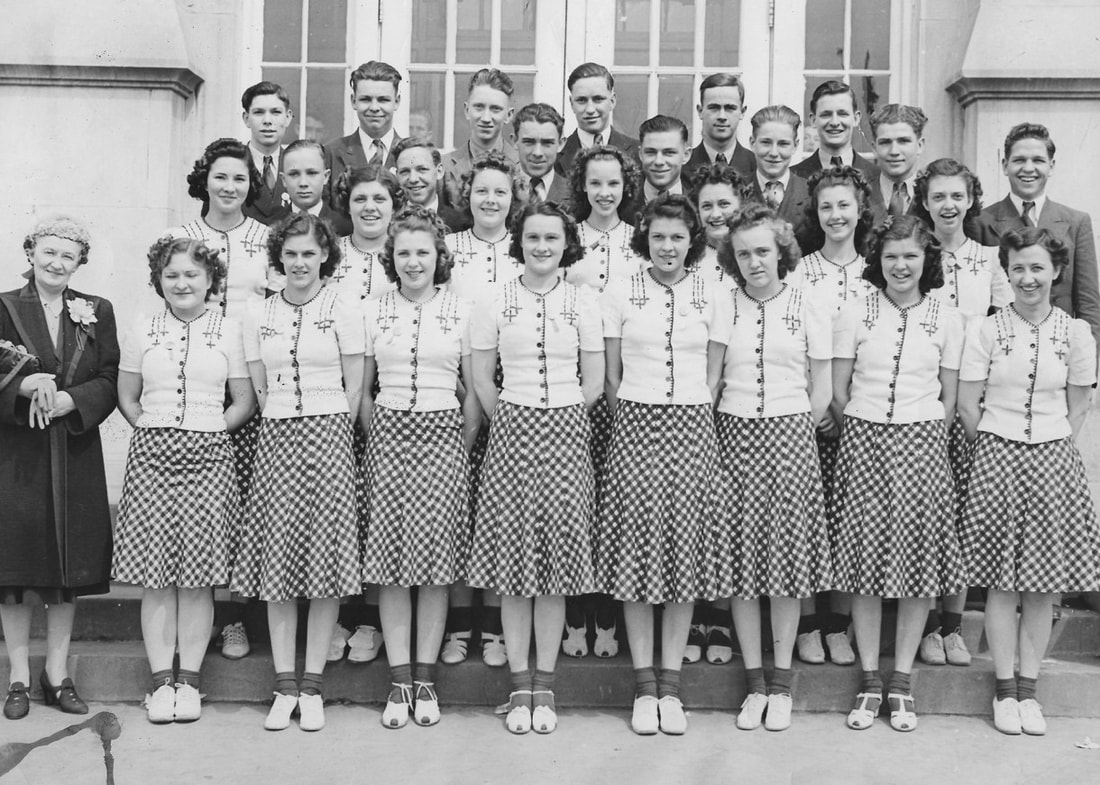 by Marcia Napier, Grain Valley Historical Society Some of you may recall seeing this photograph before. While it was chosen for December in the Historical Society’s 2023 calendar, I previously ran this picture with an article in The Valley News in April of 2021, over 2 ½ years ago. The photograph, taken in 1939, is believed to be the Glee Club. I was first attracted to the picture because of the matching dresses, but mostly because of the shoes and socks. I learned that nylon stockings made their grand debut in a splashy display at the 1939 World's Fair in New York. They were not released for sale to the public until May 15, 1940. During this post-depression, pre-WWII period silk stockings were far too expensive and probably difficult to find! Thus, we have socks! While I do not recognize everyone in the photograph, I will point out those I do know. According to the 1939 yearbook, the music teacher is Mrs. Raymond Scott. Row one: Norma Jean (Williams) Carmack is the first student and next to her is Eugenia Williamson. The fifth girl in the front row is Benola Tate, followed by Sue (Caldwell) McBroom, Elouise (Stumpp) Shrout and Earlene (Tate) Mueller. In the second row, I believe the fourth girl is Dorothy Savage followed by Susie Reeder. As far as the men, the third row starts with Herbert Sebolt. The third boys is Norman McBroom, followed by Robert Wolfe. On the back row I recognize the second and third boys as Jack Mueller and Keith Shrout. The 1939 yearbook was only the third one published by the students at GVHS. Like the 1936 and 1938 books (none was published in 1937) the books only had a section for faculty and the Board of Education, and a section for each grade which included individual photographs along with the class history and class prophecy. The first several books had random activity pages, sometimes the basketball team, the drama club, a school play, or a few candid shots. But the kind of pictures like the one above were evidently taken for the students involved in group. It wasn’t until the 1941 publication that the yearbooks began to feature student organizations, like band, choir, the publications class, student council and sports. The elementary grades began to appear in the late 1940s. This is the last publication of the Valley News for 2023 as the publishers take a two-week break, AND SO DO I! I’ll be back in January with a series on houses in a around town. Merry Christmas and best wishes for a joyous New Year. See you in 2024! 
As we gear up for 2024, it’s time to dive into the blend of time-honored traditions and exciting new trends that will shape our upcoming year. In a world that’s always on the move, the way we celebrate the end of one year and the start of another is constantly evolving. One thing we’re gladly leaving behind in 2023 is restrictive diets. It’s time to embrace a more balanced and holistic approach to well-being, focusing on nourishing our bodies with a diverse range of foods rather than sticking to rigid dietary rules. We’ve realized that these restrictive diets often do more harm than good, promoting unsustainable and unhealthy habits. Instead, people are adopting intuitive eating, being more mindful of what they consume, and placing greater emphasis on the quality of their ingredients. It’s a refreshing shift toward sustainable and flexible wellness, where we understand that true health encompasses both body and soul. If you need some guidance on making this transition, Hy-Vee dietitians can help you make the switch while ensuring you’re nourishing your body appropriately. Another trend that’s keeping its momentum into 2024: the rise of plant-based ingredients. With new research showing the health benefits of consuming more plants and a wide variety of plants in our diets in addition to sustainability of food production methods and crops, more and more consumers are turning to plant-based options. Whether it’s meatless burgers that taste just like the real deal or innovative dairy alternatives, these plant-based ingredients have moved from being niche to becoming mainstream staples in our kitchens and at restaurants. As we step into the new year, the plant-based movement is firmly rooted in our culinary and cultural landscape. As a Hy-Vee dietitian, I would be happy to help you navigate a plant-based approach when it comes to your diet in 2024! There’s another exciting new trend we’re eager to embrace in 2024, and that’s allergy-friendly dining and heightened awareness of food allergies. It’s a trend that’s not limited to those with dietary restrictions; it symbolizes a more considerate and inclusive approach to food. Restaurants and food manufacturers are making a stronger commitment to providing safe and delicious options for individuals with allergies, sensitivities and dietary restrictions. And it goes beyond just gluten or nuts: It encompasses a wide range of allergens. By embracing these inclusive food practices, the industry sends a powerful message that everyone deserves the joy of a great meal, regardless of their dietary needs. You can already see this trend in action with Hy-Vee’s dietitian picks of the month, like General Mills gluten-free cereals and Sweet Loren’s cookie dough. Both companies are proud to offer many delicious gluten-free products. If you’re on the hunt for unique and meaningful family traditions to add some extra sparkle to your New Year’s Eve this year, why not consider adopting the Twelve Grapes tradition from Spain? This charming custom involves eating one grape for each stroke of midnight, with each grape symbolizing good luck for each month of the coming year. It’s a delightful and interactive way to welcome the new year, and it’s suitable for all ages. So as the clock nears midnight on December 31, gather your loved ones, prepare a dozen grapes, and make a wish with each sweet bite. This tradition from across the sea can bring a touch of Spain’s warmth and festivity to your own New Year’s festivities, creating cherished memories and a unique connection to cultures around the world. For more grape-centric ideas for your New Year’s party, check out our Grape and Thyme Baked Brie, below. Cheers to 2024! Grape and Thyme Baked Brie Serves 6 All you need: 1 (8-oz) pkg Brie 1/3 cup Hy-Vee walnut pieces 1 small cluster grapes 1 tbsp Hy-Vee avocado oil 1 tbsp chopped fresh thyme, plus extra for garnish, if desired ¼ tsp flaky sea salt ¼ tsp Hy-Vee black pepper ¼ cup salted caramel topping All you do:
Nutrition Facts per serving: 270 calories, 23g total fat, 12g saturated fat, 0g trans fat, 50mg cholesterol, 300mg sodium, 9g total carbohydrates, 1g dietary fiber, 5g total sugar, 8g protein Recipe source: Grape and Thyme Baked Brie | Hy-Vee Hy-Vee dietitians are eager to help you navigate your nutrition goals as we head into the New Year! If you’re ready to learn how a Hy-Vee dietitian can help you, schedule a complimentary Discovery Session today by contacting our Discovery Call Center via email nutritionservices@hy-vee.com or call (515) 695-3121. The information is not intended as medical advice. Please consult a medical professional for individual advice. by Marcia Napier, Grain Valley Historical Society As the days keep getting shorter, we realize winter is nearly here. The winter solstice, which marks the first day of winter 2023, occurs on Thursday, December 21, 2023 at 10:27 p.m. EST. Winter solstice is the astronomical moment when the Sun reaches the Tropic of Capricorn, we have our shortest day and longest night of the year in the Northern Hemisphere in terms of daylight. Regardless of what the weather is doing outside your window, the solstice marks the official start of winter. For folks in Grain Valley, December 21st meant the Christmas program at school; yes, we could still call it Christmas and sing “Silent Night” by candlelight. Can any of you remember those Christmas programs when we sat on risers on the old gym floor, gathered around the “fresh” cedar tree. Girls wore their formals from prom or homecoming and our full skirts billowed out around us! The aroma from that tree filled the entire gym and spilled out into the stairway. And, by the way, no one ever asked where the senior boys got the tree! December 21st meant school was out, or it would be soon, for Christmas vacation. With any luck there would be snow on the ground and a “White Christmas.” A few years ago at the fraternity house where I worked in Columbia, several young men were seated around the breakfast table when I mentioned the classic song. To my surprise, and dismay, they didn’t know what I was talking about. I put the CD into the computer in my apartment, turned the volume ALL THE WAY UP, and played it over and over for the next three days. Needless to say, they were really happy for finals to end so they could go home for winter break. December 21st meant last minute shopping, getting out the sled, and baking cookies to leave for Santa on Christmas Eve. When Santa came to our house he got a plate of Mom’s best Jam Thumbprints, but at Christmas time they were topped with red or green maraschino cherries. JAM THUMBPRINTS (Mom’s recipe) 2/3 cup butter 1/3 cup granulated sugar 2 eggs (separated) 1 tsp vanilla 1/2 tsp. salt 1 1/2 cups sifted flour /4 cup finely chopped nuts Red and green maraschino cherries, well drained Cream together butter and sugar until fluffy. Add 2 egg yolks, vanilla, and salt; beat well. Gradually add flour, mixing well. Shape in 3/4-inch balls; dip in 2 slightly beaten egg whites, roll in chopped nuts. Place 1-inch apart on greased cookie sheet. Press center of each with thumb. Bake at 350-degrees for 15 minutes. Cool slightly, remove from pan and cool on rack. Top each with a cherry (or cherry or strawberry jam). Enjoy! The Historical Society will be opened on December 13 and 20 with Christmas Decorations, Vintage toys and Thumbprint Cookies, along with Coffee, Hot Tea and Punch! Come and visit! 
The holiday season is made extra special with quality time and delicious food shared with family and friends! However, hosting can come with its own set of challenges – especially if you are inviting guests with food allergies. So, what do you need to know about navigating the holidays when it comes to guests following a gluten-free diet? Let’s start by breaking down the basics of what exactly gluten is and how you can help gluten-free guests coming to your holiday celebration. Gluten isn’t as scary as it may seem – it is simply a protein found in wheat, barley, rye and a wheat-rye hybrid called triticale. It helps provide elasticity and structure to many of our favorite baked goods but can also be found in a myriad of products on store shelves. Gluten can cause discomfort or even serious health issues in people with celiac disease or gluten intolerance. But what is the difference between celiac disease and gluten intolerance? Celiac disease is an autoimmune disease in which an autoimmune response causes damage in the small intestine when gluten is consumed. An individual with a gluten intolerance may experience many of the same symptoms as someone with celiac disease, but there is no damage that occurs in the small intestine. Also, while there are tests to detect celiac disease, there are no diagnostic measuring tools to diagnose a gluten intolerance. How can you make guests who are following a gluten-free diet more comfortable at your holiday gathering? Thoroughly wash all dishes, serving utensils, cookware, etc., when preparing and serving gluten-free dishes. This is because those with celiac disease can be impacted by cross contamination. So, if you commonly prepare items containing gluten in your kitchen and you are even serving other dishes that contain gluten at the party, be sure to give those dishes and surfaces an extra scrub! It could also be helpful to label dishes and let guests know what options are gluten-free so they can freely serve themselves. Now that you’re ready to host, let’s talk sweet and savory baked treats that all party guests can enjoy – even those with celiac disease or a gluten intolerance! Starting with sweet – I recommend Sweet Loren’s ready-to-bake cookie dough. These sweet treats are not only gluten-free but dairy-free, peanut- and tree nut-free. Sweet Loren’s even offers select varieties that have 40% less sugar than other leading national brands but that still satisfy your sweet tooth. For guests preferring savory, common pantry staples like the gluten-free Chex Cereals come in handy! Gluten-free Chex Cereals are made with whole grains and fortified with key vitamins and minerals and make a great base for a snack mix. I recommend whipping together this crowd-pleasing party snack in advance. It’s perfect to serve as guests are arriving at your holiday gathering or enjoy as an on-the-go snack while traveling to your holiday destination! To satisfy their sweet tooth, it’s easy to keep a package of Sweet Loren’s ready-to-bake cookie dough on hand to throw in the oven just before guests arrive. Everyone loves a warm cookie! Gluten-Free Original Chex Party Mix Makes 22 servings All you need: 4 cups Corn Chex 4 cups Rice Chex 2 cups Cheerios 2 cups bite-size gluten-free pretzel sticks or twists 6 tbsp vegan dairy-free buttery vegetable oil spread 2 tbsp gluten-free Worcestershire sauce 1½ tsp gluten-free seasoned salt ¾ tsp garlic powder ½ tsp onion powder All you do:
Recipe source: https://www.chex.com/recipes/gluten-free-original-chex-party-mix If you’re ready to take a deeper dive when it comes to navigating a gluten-free diet, check out our On-Demand Virtual Gluten-Free Nutrition Tour! It’s complimentary and you receive access to the recorded tour immediately after registering. Register for your on-demand tour today: https://www.hy-vee.com/healthnew/dietitians. The information is not intended as medical advice. Please consult a medical professional for individual advice. by Marcia Napier, Grain Valley Historical Society The November calendar photo for 2023 features a photograph of the 1932 Women’s Basketball team coached by Noel Wilkerson and Luella Linewebber. The team was quite successful, winning the 1932 Conference Championship. Research in an old newspaper tells revealed the teams in the conference were
I find it interesting that the boys and girls played different teams but were in the same conference. Since Grain Valley did not have a yearbook until 1936 and athletic teams, musical groups and clubs were not always featured, it is really impossible to say who they might have played and beaten to become the Western Missouri Conference Champions! I can tell you that girls’ games featured six players from each team. There were three forwards and three guards and each played half-court. I do recognize a few players, only because they stuck around Grain Valley and I knew them in the 1950s and beyond. 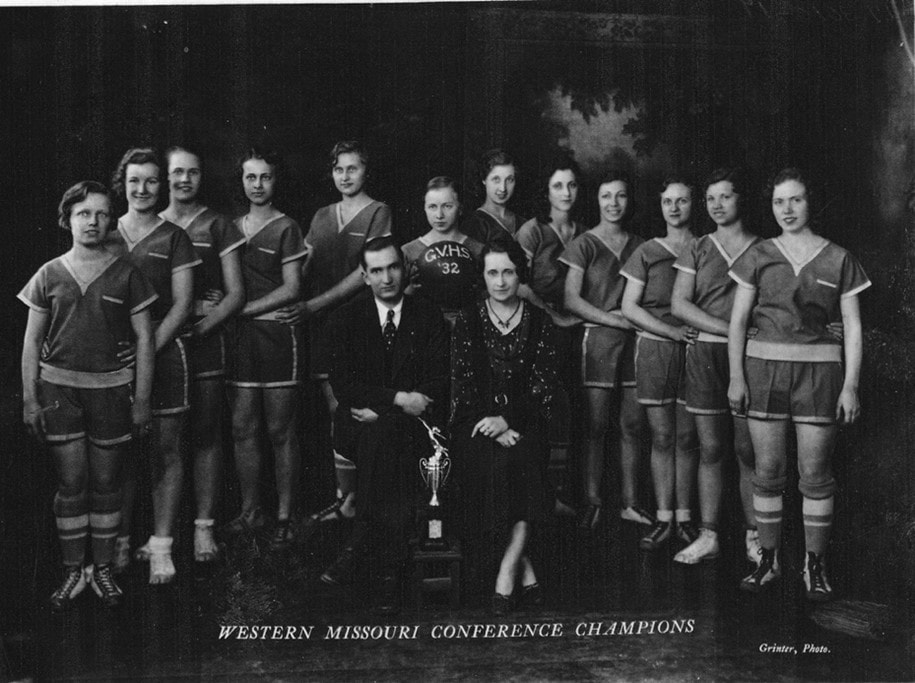 The team (left to right) Betty (Bartlett) Carpenter/Owens, Isabelle (Napier) Clark,( my dad’s sister, also known as Aunt Izzy), Imogene (Sebolt) Grossheider, and Edna (Rowe) Elliott. I do not know the girl holding the basketball but the two on each side of her were the Bush sisters, Evelyn and June. Since the newspaper listed June as the center, she is probably the one on the left. Aren’t centers usually the tallest player on the team? Next is Artis (Phillips) Rumbo. (Her first husband was mom’s cousin Jack, Uncle Porter’s son), Margaret Ann Hutchens, Mildred (Rumbo) Napier (I called her Mom!) Mary Chiddix and Merle (Houston) Costigan. Coach Wilkerson and Coach Linewebber are seated. Note: Although this article is about the 1932 Girls’ Championship Team, I will point out that my father, a forward on the boys’ team was the high point scorer (8 points) as Grain Valley defeated Ruskin by a score of 17-15! by Marcia Napier, Grain Valley Historical Society Sixty-eight years ago, the most sought-after toy in Grain Valley and indeed the nation was the famous coonskin cap, an exact replica of the one worn by Davy Crockett, King of the Wild Frontier. Of course, my brother got one for Christmas, along with several of his classmates. I am not sure what became of that hat. I am guessing it got tossed decades ago. But his Davy Crockett guns –they are still around. I typically go on the internet for some background information on my weekly topic. Just let me say, there is tons of information about David “Davy” Crockett, both the real David and the folklore Davy. It would take me days, maybe weeks to read it all. I will tell you that indeed, Davy Crockett was “…born on a mountain top in (East) Tennessee” on August 17, 1786. He grew up there and gained a reputation for hunting and storytelling. He was elected to the Tennessee state legislature in 1821. In 1827, he was elected to the U.S. Congress where his opposition to President Andrew Jackson, especially the Indian Removal Act led to his defeat in 1831. He was elected again in 1833, then narrowly lost in 1835, prompting his angry departure to Texas shortly thereafter. In early 1836, he took part in the Texas Revolution and died at The Alamo on March 6, 1836. David Crockett was an American folk hero, frontiersman, soldier, and politician. He is often referred to in popular culture as the "King of the Wild Frontier". He was popularized by Walt Disney in 1955 when three episodes appeared on the hour long, Sunday evening television show, The Magical World of Disney (later renamed The Wonderful World of Disney). A mostly fictionalized account of a real American adventurer, "Davy Crockett: King of the Wild Frontier" became a movie comprised of edited portions of the three episodes of Disney's VERY popular television series. It is a highly fictionalized version of the exploits of the frontier scout and adventurer. When the film begins there is a statement reading 'The characters and events in this photoplay are fiction....'. Well, this isn't completely true...quite a bit of the movie is truth. Crockett DID exist, as did many others in the film, such as General Andrew Jackson. And, some of the events happened...but the Disney writers decided that the real story of the man's life was too dull and so they just made stuff up. It's a shame, as Crockett was a very interesting and unusual character from 19th century American history. The Grain Valley Historical Society will be open on Wednesday, December 6, 13, & 20, 2023 from 10:00 AM to 3:00 PM. Come see the Davy Crockett guns, along with many other Vintage Toys! We will be serving Coffee, Tea, Punch and Homemade Christmas Cookies! All are welcome!
The Davy Crockett cap gun and coonskin cap. Photo credit: Grain Valley Historical Society by Tara Sallee MS, RD, LD, Hy-Vee Corporate Dietitian In the age of viral internet trends and social media sensations, it’s all too easy to get swept up in the latest nutrition fads that promise extraordinary health benefits and miraculous transformations. But do some of these “superfoods” hold up to the hype? I will help you navigate the maze of two prominent nutrition trends. We’ll explore the health benefits and how to incorporate these foods into your meal plan. Let’s separate nutrition fact from fiction so that you can make informed choices to meet your health and wellness goals. First up – cottage cheese! From ice cream to omelets, cottage cheese has been enjoying the spotlight. While some people don’t appreciate its texture, others are adding it to their diet every chance they get. One reason for incorporating cottage cheese in a diet is its protein content. Protein is essential for muscle growth. It also helps you feel full and satisfied to support weight management goals. And protein isn’t the only nutrient in cottage cheese. It contains several B vitamins, including B12, riboflavin (B2) and niacin (B3), which are important for energy metabolism, nerve function and maintaining healthy skin. But one nutrient present in cottage cheese to be aware of is sodium. If you are concerned about blood pressure management, compare brands of cottage cheese and find a brand that is lower in sodium. Or focus on adhering to the serving size and pay attention to the frequency at which you consume cottage cheese if you are monitoring your sodium intake. Last, but certainly not least: Cottage cheese is incredibly versatile. It can be used in savory dishes like salads and omelets as well as in sweet treats like smoothies and desserts. This versatility makes it easy to incorporate into your diet. In summary, cottage cheese meets the mark and can be part of a balanced diet. Now let’s explore chia seeds. Chia seeds have gained popularity in recent years for their impressive nutritient profile and versatility. Let’s break down why these tiny seeds are being touted for their health benefits – specifically digestive and heart health. Chia seeds contain soluble fiber, which can help promote regular bowel movements, prevent constipation, and support a healthy digestive system. Of course, when increasing fiber in your diet, it is important to increase fluid intake. As you increase your fiber intake you may notice bloating or constipation if you are not consuming enough water. Chia seeds are also associated with heart health benefits due to their ALA omega-3 fatty acid content. Omega-3 fatty acids support heart health by reducing inflammation and improving cholesterol levels. Just like cottage cheese, chia seeds are incredibly versatile and can be added to various foods and beverages. While you can simply mix with water and drink, I recommend adding a tablespoon to your yogurt or oatmeal or even blending in a smoothie. You can boost the fiber intake of your weekend brunch by adding chia seeds to muffins, pancakes or waffle batter. Love eating leafy greens? Try mixing chia seeds into your favorite salad dressing and drizzling on your salad for an extra dose of fiber. To conclude: Chia seeds meet the mark and can be incorporated in a balanced diet. Balance is key to supporting a healthy lifestyle. I recommend speaking to a registered dietitian to help you create a meal plan to support your health and wellness goals. And try making this fabulous Cottage Cheese Breakfast Bowl at home to fuel your day and enjoy the health benefits! Cottage Cheese Breakfast Bowl Serves 2 All you need: 4 cups Hy-Vee large curd 4% milkfat cottage cheese 1 cup Hy-Vee Short Cuts triple berry blend ½ cup Good Graces gluten-free Oats & Honey Protein Granola 2 tbsp Hy-Vee natural sliced almonds 2 tbsp Hy-Vee honey Fresh mint, for garnish All you do: 1.Divide cottage cheese between 2 serving bowls. Arrange berries, granola and almonds on top. Drizzle with honey. Garnish with mint leaves, if desired. Recipe source: https://www.hy-vee.com/recipes-ideas/recipes/cottage-cheese-breakfast-bowl Still have questions on nutrition trends or just wondering how to get started on your health and wellness journey? Speak with a Hy-Vee registered dietitian who can help you create a plan that works for you. If you’re ready to learn how a Hy-Vee dietitian can help you, schedule a complimentary Discovery Session today by contacting our Discovery Call Center via email nutritionservices@hy-vee.com or calling (515) 695-3121. This information is not intended as medical advice. Please consult a medical professional for individual advice. |
Categories
All
Archives
May 2024
|





 RSS Feed
Grain Valley NewsGrain Valley News is a free community news source published weekly online. |
Contact Us |

|