
|
|
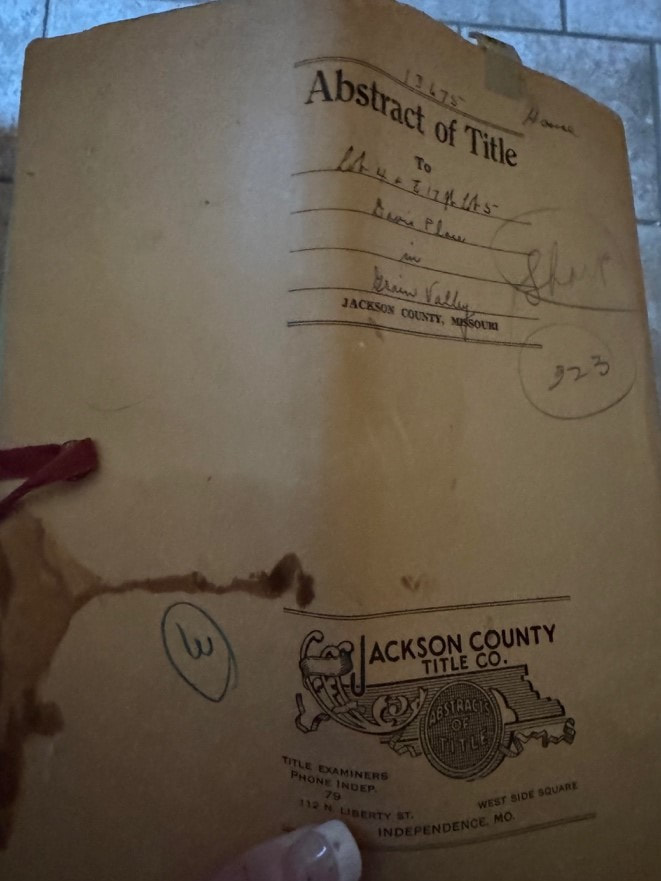
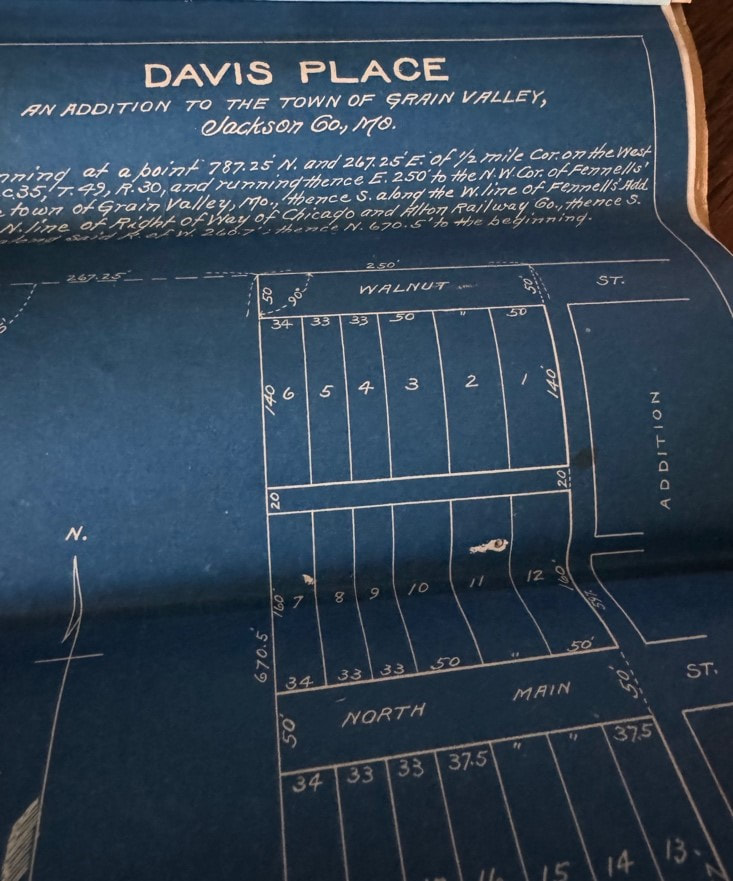
by Dr. Tamra Reall, University of Missouri Extension (Article used with permission from the Kansas City Gardener.) Did you know that there is a Kids Ask Dr. Bug video series? Check it out! https://bit.ly/KADBvideos When will start seeing butterflies again? As the days lengthen, temperatures rise, and flowers begin to bloom, butterflies gradually reappear. Different butterfly species emerge at varying times. Some may flutter as early as March or April, while others wait for warmer weather and abundant flower nectar. Butterflies adopt different strategies to survive winter, either as eggs, caterpillars, pupae (known as chrysalises), or adults. They seek refuge in protected spots like under leaves, in tree crevices, under bark, or in sheds. As temperatures climb, they emerge, seeking flowers for food and places to lay eggs. Certain butterflies depend on specific flowers, appearing only when those plants bloom. For instance, Monarch caterpillars solely feed on milkweed, though as adult butterflies, they sip nectar from various flowers. This means they seek milkweed to lay eggs but linger longer if other flowers are available. So, keep your eyes open! Once consistently warm weather arrives, these vibrant creatures will dance around in gardens, parks, and even your backyard. By planting flowers that attract butterflies, you might create your own butterfly haven, encouraging them to visit. Can bugs see me? Insects perceive the world around them in fascinating ways, different from how we do! Most insects might sense you as part of their environment, but they don’t see you in the same way we see each other. Insect eyes are intriguing—typically, they typically have two compound eyes made up of tiny parts called ommatidia. The size of these compound eyes can vary; for instance, an ant has fewer ommatidia than a dragonfly. This means an ant’s compound eyes are smaller, while a dragonfly's larger eyes allow it to see more at a time, which is especially useful when hunting while flying. Additionally, many insects have three simpler eyes on their heads called ocelli, which sense light and dark, or even polarized light, helping insects orient themselves and find their way. Some insects, like butterflies and bees, have extraordinary eyesight for arthropods They can distinguish shapes and colors, even colors invisible to us. If you're in their way, wearing colors resembling flowers, or carrying something attractive such as food, they might notice you or even land on you. However, insects like ants or certain beetles perceive the world through shadows or movements rather than detailed images. Beyond eyesight, insects have incredible sensing abilities. Mosquitoes rely on detecting carbon dioxide and heat to 'see' you. Others use their antennae to feel air vibrations or detect heat and chemicals (known as pheromones) to navigate their surroundings. In short, insects might not see us in high definition, but their impressive senses allow them to detect our presence in their own unique and intriguing ways. Can ants swim? Ants might not swim like we do, but they're pretty clever when it comes to water! They have tiny hairs on their bodies and because they're so small and light, the surface tension of water helps them stay on the surface without sinking. But when there's a flood, the whole ant colony needs to stick together. They hold onto each other using their legs, antennae, and even their mouths, creating what's called an 'ant raft.' The ants at the bottom support the ones above, keeping them safe until they find dry ground. They're so good at this that they can live like this for weeks! Sometimes, when ants need to cross water, they use the same linking skill to create bridges. It's all about teamwork! Check out this link for more information: https://b.gatech.edu/48JM6ZB . So, even though ants don't swim like we do, they've got incredible skills to handle water and keep themselves safe when things get wet. What can we do to help insects during the winter? Helping insects during winter is fun and easy to do! One of the easiest things to do is to leave leaves in your yard. Think of leaves as a cozy blanket for insects—they use them to stay warm and protected from the cold, rain, and snow. Another great way to help is by keeping parts of your garden a little messy. It might sound funny, but having areas with old logs, twigs, or piles of leaves gives insects hiding spots to stay warm. Letting plant stems stand tall provides hiding places, almost like tiny hotels, especially for native bees that lay their eggs in these stems. Leaving them intact offers shelter until it gets warmer, helping the bees without putting them at risk from pests that might invade containers where we keep these stems. By doing these simple things, you're giving insects a helping hand to stay safe and cozy until spring returns. Do you have questions for Dr. Bug? Send them to https://bit.ly/KidsAskDrBug To help me learn what you learn from this column, or to share feedback, please consider filling out this survey: https://bit.ly/KidsAskDrBugSurvey 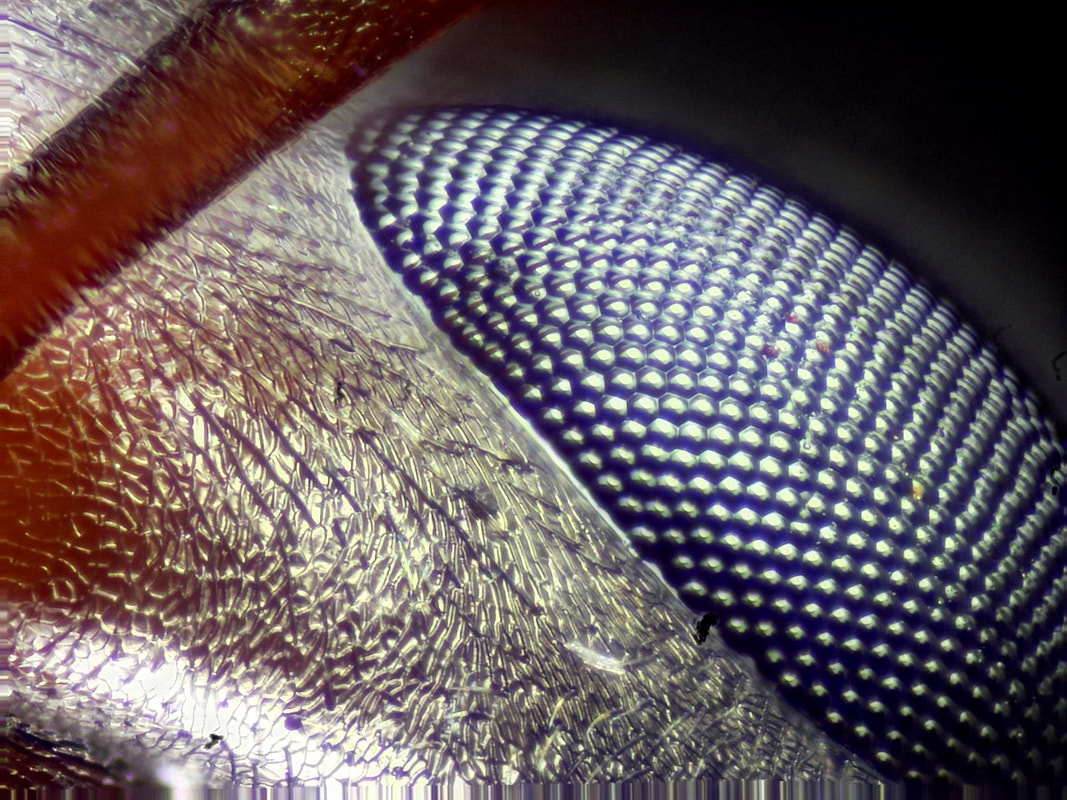 Image: A close-up view of an insect's eye where each tiny bump is called an 'ommatidium.' When all these bumps team up, they make what's called a 'compound eye,' helping the insect see lots of things around them. Image by Woodturner, Pixabay.  by Marcia Napier, Grain Valley Historical Society On October 8, 1888, William and Nancy Davis filed with the Recorder of Deeds to establish Davis Place and added 19 lots to the Town of Grain Valley. The entire addition was 250 feet along the northern edge (walnut Street), 597 feet along the eastern edge (adjoining the Finnell addition) and 267.5 feet along the southern edge adjacent to the railroad, and 670.5 feet along the western edge (farmland). My extensive research has revealed nothing about William and Nancy Davis. I found a William Davis with a Napoleon address in the 1890s but there was no other information. The Abstract of Title was a gift to the Historical Society from Winona Burgess and the transactions mentioned in the title become specific to Lot 4 and East 17 feet of Lot 5, as noted on the cover of the document.
The area included 50 feet frontage on Walnut Street and the lots are 140 feet deep. This land was first sold to W. C. and Lillian Morris on September 5, 1890. There were three additional owners between 1890 and 1895 when Lots 4, 5, and six were sold to W. T. W. and Nancy Douglas for $75. They owned the property until 1910 and I can only guess that the house was built during those years. When they sold the property to A. W. Dimmit on January 22, 1910, the recorded price was $750. In 1912 the west 16 feet of Lot 5 and all of Lot 6 were separated from the title and sold to Everett Snodgrass. The. Following year John Isenhour bought the remaining property for $800. 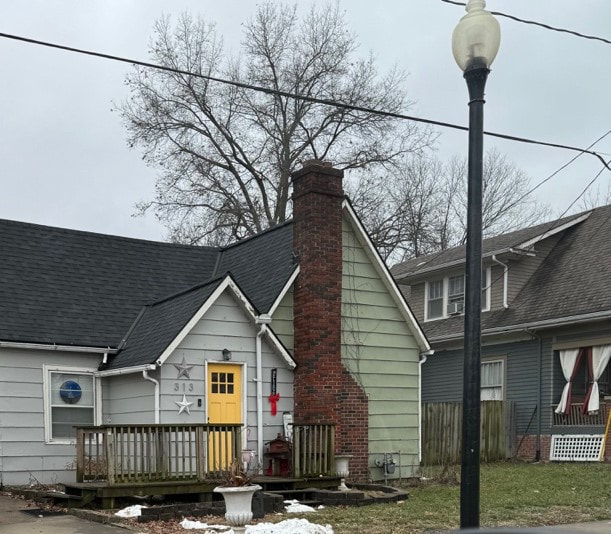 After 1913, five additional families lived there, before Winona and Floyd Sharp purchased the house on January 24, 1941. The price had gone up to $900. Floyd Sharp owned the Grain Valley Lumber Yard just south of the railroad tracks on Main Street. They raised their son, David, in the home and he graduated from Grain Valley High School in 1959. Winona later married Charles Burgess and they lived there until the early 2000s. I remember the house during those years. Winona was my Sunday School teacher and a close friend of my aunts. We often walked up Walnut Street to visit and have coffee (Kool-Aid for me). I most remember her back yard and her beautiful flower garden. Winona had every variety of flower and they bloomed from early springs until the fall frost. In the late 1950s, early 1960s she ran a beauty shop at the back of the house. In the 1970s she became a librarian when Mid-Continent built their first library in Grain Valley. Winona was a charter member and the first president of the Grain Valley Historical Society. If you’ve attended a meeting at the Grain Valley Community Center, you probably met in the Winona Burgess Room. So while I don’t know the current residents, and I didn’t know the original ones (I’m old, but not that old!) for me this house will always be Winona’s home. But most importantly, it is a Grain Valley original, with over 100 years of history in its’ walls. Visit the Historical Society on Wednesdays from 10 AM to 3 PM and learn more about early Grain Valley and the folks that called it home.  by Tara Sallee MS, RD, LD You may have heard of vitamin D referred to as the sunshine vitamin, but did you know you can also find this nutrient in food? As a Hy-Vee registered dietitian, I am frequently asked about vitamins and minerals along with all their associated health benefits. During the winter months, while you may not be catching those rays, let’s review some of the most asked questions about the sunshine vitamin and shine some light on how you can check your vitamin D status. If you are wondering whether you are currently getting enough Vitamin D, you will need to take a blood test. While your doctor or other medical professional can advise what levels may be right for you as an individual, for most people, this lab value should be within the range of 30-50 ng/mL. This vitamin D range can be reached through lifestyle habits such as sun exposure, diet and supplementation. Our main source of vitamin D comes from the sun, as our bodies can convert ultraviolet rays to make vitamin D. During the winter season when the sun is not shining as often, we might be more likely to be low in vitamin D lab levels. One way to help correct these values is through food sources that contain vitamin D. Foods that contain vitamin D include salmon, tuna, mackerel, mushrooms, egg yolks, fortified dairy products and fortified cereals such as many of those made by General Mills. Family-favorite cereals like CheeriosTM deliver 20% of the Daily Value of vitamin D per 1.5 cup serving. Pair this tasty cereal with fortified milk for even more vitamin D! A 3.5 oz portion size of salmon (the size of your palm or a deck of cards) provides around 60% of your daily needs. If you are curious about the health benefits of vitamin D, having your vitamin D lab levels in the recommended range can help support bodily functions such as increasing cell growth, helping control blood sugar levels, and reducing inflammation within the body. Vitamin D is also one of the major components of bone health! This nutrient is necessary for calcium absorption in the gut, which in turn helps us have healthy bones and teeth. You may be thinking, “Do I need to take a vitamin D supplement?” If choosing to take a vitamin D supplement, I encourage you to speak with your physician for a recommended dosage. If you decide to take one, Nature’s Way has you covered! Nature’s Way Vitamin D3 Gummy provides more than 100% Daily Value of vitamin D3 per gummy for daily immune and bone support.* Finally, are you curious about your vitamin D levels? Come see your Hy-Vee dietitian! Thanks to our generous sponsors General Mills and Nature’s Way, during the month of February Hy-Vee will offer 1,000 FREE vitamin D screenings at select locations on a first-come, first-serve basis. A simple finger stick will determine your level, and a dietitian can talk you through how to improve your vitamin D level. Once you request your complimentary screening, I will reach out to you to schedule your visit. Sign up on www.hy-vee.com/health or reach out to me via phone or email. Still have questions on vitamin D, nutrition trends, or just wondering how to get started on your health and wellness journey? Come visit with me and I will help create a plan that works for you. If you’re looking to boost your vitamin D intake at home, consider adding this recipe to your weekly meal plan. Sesame Salmon Oven Stir-Fry Serves 4 All you need: 4 medium carrots, peeled and julienned 2 tbsp avocado oil, divided Hy-Vee salt, to taste Hy-Vee pepper, to taste 1/3 cup unsweetened pineapple juice 2 tsp Hy-Vee cornstarch 3 tbsp Hy-Vee honey 2 tbsp Hy-Vee less-sodium soy sauce 1 (6 oz) pkg fresh snow peas 1 red bell pepper, seeded and cut into strips ¼ cup canned Hy-Vee sliced water chestnuts 1 (1 lb) Verlasso skinless salmon fillet 2 cups white rice, hot-cooked Sesame seeds, for garnish All you do:
Recipe adapted from: https://www.hy-vee.com/recipes-ideas/recipes/sesame-salmon-oven-stir-fry This content was made possible with the support of our sponsors General Mills and Nature’s Way. *These statements have not been evaluated by the U.S. Food and Drug Administration. This product is not intended to diagnose, treat, cure or prevent any disease. The information is not intended as medical advice. Please consult a medical professional for individual advice.  by Marcia Napier, Grain Valley Historical Society If you are a regular reader of this column then you know I’m on a quest to discover more about some of the oldest homes in Grain Valley. This week, my curiosity led me to Yennie Street named for Peter Joseph Yennie who was a resident of Grain Valley according to the 1910 U. S. Census. His first wife, who died in 1912, was Minnie Cates. That’s right, Mrs. Minnie Yennie! He later married Willa Ann Turner and they moved to Strasberg, Missouri, in Cass County. On a 1904 city map, Yennie is an east/west street which ran along the northern edge of town. At that time there were only nine structures on the north side of the street. The building at the north end of Capelle Street was labeled Hard Shell Baptist Church. When it became a church and how long it existed is unknown to me. Several years ago, Patricia Parr Davis, spoke at a meeting of the historical society. Her talk, “Growing Up in Grain Valley,” included going up and down each street and telling who lived in each house in the early 1940s. She also referred to the Hard Shell Baptist Church at this location. Hard Shell Baptist –also known as Primitive Baptist, Regular Baptist, Old School Baptist and Foot Washing Baptist – are conservative Baptist adhering to a degree of Calvinist beliefs. They coalesced out of the controversy among Baptists in the early 19th century over the appropriateness of mission boards, tract societies, and temperance societies. Primitive Baptists are a subset of the Calvinistic Baptist tradition. The adjective "primitive" in the name is used in the sense of "original". If I were to talk about “growing up in Grain Valley, I would refer to the structure as the home of Guy and Hattie Thompson. According to the 1950 U. S. Census, the Thompsons lived in this house with their five children. Mr. Thompson died in 1953. My memory of the house goes back to the late 1950s when Mrs. Thompson lived there with her grown son Paul. He was always working on cars in the garage at the back. Maybe it was the steep roof, maybe it was because there was no front porch at that time, or maybe it was because my grandmother called it the old Hard Shell Baptist Church; at any rate, that’s what I think of when I drive past. I wonder who attended, if it was a large congregation, and when did it cease to exist. As usual, I have many more questions than answers. Today, at 120 plus years, it in an attractive, well-maintained piece of history with a pretty little front porch. If only the wall could talk!  Photo credit: Grain Valley Historical Society FAFSA Delay Doesn't Dampen Donor Generosity: THCF Scholarship Application Deadline Extended1/18/2024
Truman Heartland Community Foundation (THCF) provides educational scholarships to a diverse group of students based on the specific criteria set in partnership with donors. Over the years, more than 184 generous donors have established scholarship funds at the foundation to help students pursue their educational goals. Since its inception in 1982, the foundation has awarded scholarships totaling more than $6.7 million. This year, the foundation is proud to make approximately $800K in scholarship funds available to students throughout the area. However, recent changes to the Free Application for Federal Student Aid (FAFSA) are causing problems and delays for students. If you plan to pursue higher education in the Fall, it is important to know about recent changes to the FAFSA, the US Department of Education’s form that gathers information about students’ financial situation to help determine their eligibility for federal financial aid. Many organizations and institutions, including THCF, use data from the FAFSA Submission Summary to evaluate the financial need of scholarship applicants. Changes to the FAFSA form for the 2024-2025 school year became available on December 31, 2023. Typically, the FAFSA is available in October each year, but due to the form change, the FAFSA was delayed. Additionally, there appears to be continuing issues with the online form, as students find the form is sometimes offline and unavailable. Because of this delay, THCF application timelines have been adjusted as well. The THCF General Application was available starting December 15, 2023, and will remain open until April 1, 2024. All essays, letters of recommendation, and other documents that may be required must be submitted by the deadline without exception. If you want to learn more about the FAFSA changes, visit www.mofafsa.org. THCF is committed to helping donors achieve their philanthropic goals and students achieve their academic goals. If you have questions about the FAFSA, need to know how to go about setting up a scholarship fund, or have problems during the application process, please visit the Truman Heartland Community Foundation website at www.thcf.org/students/scholarships or contact Rachael Watkins, Director of Scholarships at Truman Heartland Community Foundation, watkins@thcf.org. We are honored to help our fundholders create opportunities for students to pursue their dreams and to support them on their educational journeys.  In planning the Historical Society calendar for 2024, it was decided to feature “Downtown” Grain Valley, as the grant from Missouri Main Street moves forward with revitalization efforts. As I did in 2023, each month I will feature the calendar page and attempt to tell you more about our town. For the month of January, you will see a 1904 map that includes the streets the Downtown Grain Valley committee is seeking to restore and modernize while attempting to maintain some of the historical character. So watch for some changes as we “refresh” our town from the railroad tracks North to Walnut and from Gregg Street East to Cypress. 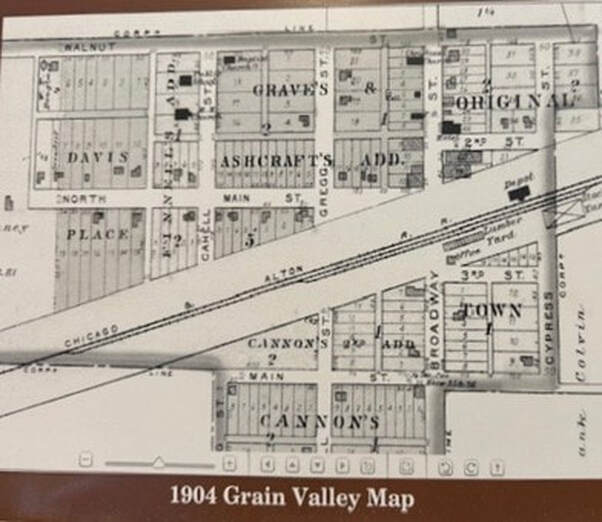 January 2024 Calendar Page. Photo credit: Grain Valley Historical Society. If you are looking for the Historical Society, it is on old Broadway Street, Lot Number 9 in the Graves’ and Ashcraft Add. Visit us any Wednesday between 10 AM and 3 PM. You can learn more about the museum and any other buildings in Downtown Grain Valley.
Brrrrrr… it’s cold out there and leaving the house to go run errands is the last thing you want to do. Plus, the New Year often re-invigorates your health and wellness journey as you start prioritizing your health and cooking more at home. That makes this month the perfect time to stock your pantry with key ingredient staples that will keep your favorite warm, cozy and nutritious meals on the table. Not to mention, maintaining and organizing a pantry is a convenient and cost-effective way to approach blustery cold evenings and prepare yourself for those last-minute evening dinner needs. Keep warm in the kitchen this winter with my top five dietitian-approved pantry staples!
Last but not least, keep an inventory of what you have in your pantry and keep it updated to avoid stocking up on duplicates you won’t be able to get to before the expiration. This will make it much easier to throw together a quick and nutritious meal and save money by avoiding food waste! Warm up this winter season by trying this Pasta Fagioli Soup below. Pasta Fagioli Soup Serves 10 All you need: 2 tbsp Chosen Foods avocado oil 1 (1-lb) pkg ground mild Italian pork sausage 1 yellow onion, chopped 3 medium carrots, peeled and sliced 2 stalks celery, sliced 3 cloves garlic, minced 2 tsp Hy-Vee Italian seasoning 1 tsp Hy-Vee salt 1 (15-oz) can Hy-Vee Great Northern beans, drained and rinsed 1 (15-oz) can Hy-Vee no-salt-added garbanzo beans, drained and rinsed 1 (15-oz) can Gustare Vita diced tomatoes, undrained 2 (32-oz each) pkgs Hy-Vee 33%-reduced-sodium chicken broth 2 Hy-Vee dried bay leaves 1 cup dry Banza rigatoni pasta Parmigiano Reggiano cheese, freshly grated, for garnish Fresh Italian parsley, minced, for garnish All you do: 1.Heat avocado oil over medium heat in a large stockpot. Add sausage to stockpot and cook, breaking up large pieces with a wooden spoon, until cooked through (165 degrees). Add onion, carrots, celery, garlic, Italian seasoning and salt. Cook for 3 to 5 minutes or until vegetables soften. 2.Add Great Northern beans, garbanzo beans, diced tomatoes, chicken broth and bay leaves. Cover and bring to a boil. Add dry pasta and cook for 7 minutes, uncovered, or until pasta is al dente. Remove from heat. 3.Divide soup among 10 bowls. If desired, garnish with fresh Parmigiano Reggiano cheese and/or fresh parsley. Recipe adapted from: https://www.hy-vee.com/recipes-ideas/recipes/pasta-fagioli-soup by Marcia Napier, Grain Valley Historical Society If you have driven through the older parts of Grain Valley in the past year, you will have noticed that several older homes have gotten a face-lift. It’s almost like the Napiers have come to town; Erin and Ben from the popular TV show, “Home Town” on HGTV. And no, they aren’t related; well maybe! Ben Napier’s ancestors do come from the same area in Northern Scotland where my father was born. However, there are so many men with the same names; Ben, James William, Alexander, Charlie; that I have not been able to make a connection. This week’s house is on Front Street in what may have been part of the Davis Addition. The photograph above shows Nadine O’Connell outside the family home on Front Street. Nadine was born to John Thomas and Creola (Warren) O’connell on November 14, 1906. The information on the back of the photo only read “Nadine outside our home on Front Street.” From her size, I would imagine the photograph was taken in the summer of 1909 or 1910, because by 1911 Nadine had a baby sister, Danese. I’m guessing both girls would have been in the picture. By the 1950s I remember this home as the residence of Grandma Heidelberger. No, she wasn’t my grandmother, but it seemed like everyone in our then small town called her grandma. She was Margaret (McAlexander) Heidelberger (1870-1954), and she was the widow of August Heidelberger (1862-1928) an immigrant from Baden, Germany. I used to visit Grandma Heidelberger with my grandmother when I was quite young. I don’t remember who lived there after she died, and I don’t believe I was ever in the house after that time. I do know the house was owned by Nancy Totton and I assume it was inherited by her children after her recent death. Of course, the history buff in me would have gone for the original architectural style, but I’m really just happy this much older home in Grain Valley is being preserved and not torn down. Next time you are in town, cruise down Front Street and see the transformation taking place to this old house. It must be at least 125 years young. That’s what I believe you would call a house with “good bones!” 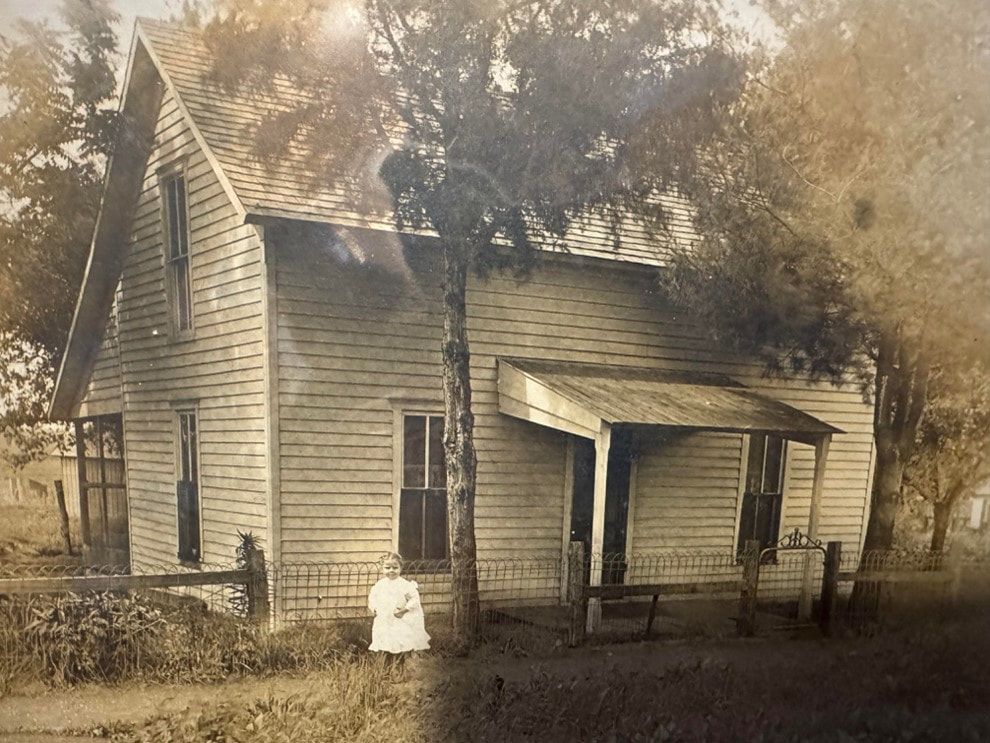 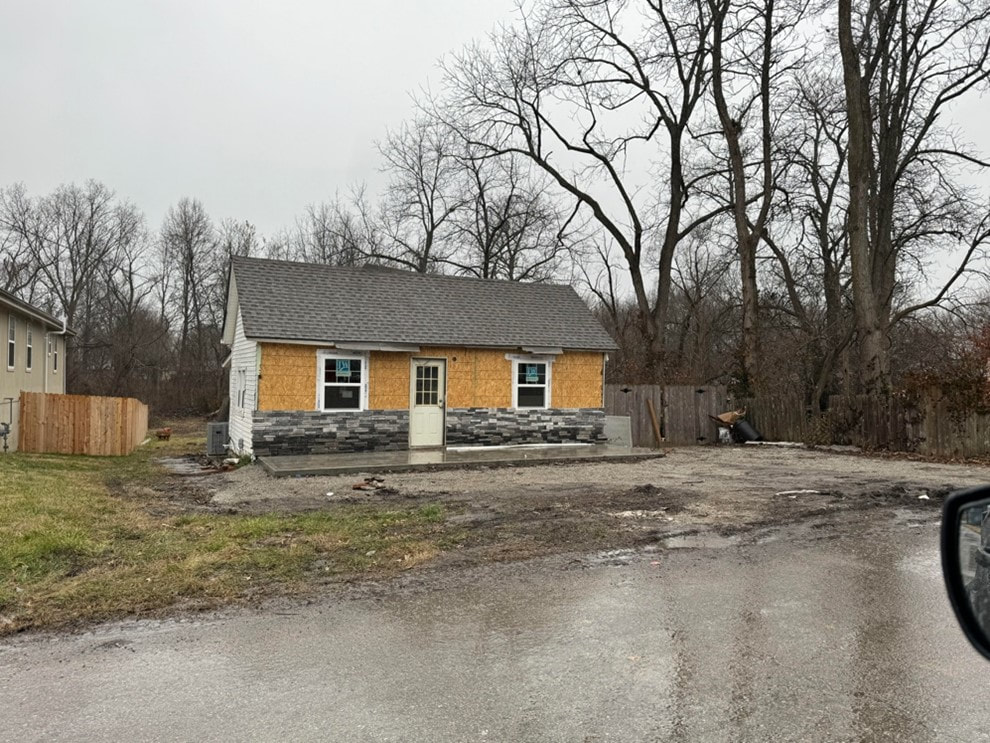
As we transition into the New Year, many of us embark on a journey of self-improvement and set resolutions aimed at achieving a healthier lifestyle. New Year's resolutions are an opportunity for personal growth. Hy-Vee dietitians are here to help guide you in forming new habits and staying on track with your health and wellness resolutions this New Year. Whether you are focusing on dietary changes, implementing exercise, or just overall well-being, our team is dedicated to supporting you throughout your journey toward a healthier, happier you! With expert advice and personalized guidance, I aim to make your resolutions a seamless part of your lifestyle, ensuring that the positive changes you implement become long-lasting habits. As you get started this New Year I want to share a few of my top tips when it comes to setting your goals and managing your resolutions.
I am here to help you navigate those New Year’s resolutions. Whether we meet in person or virtually, we can find the best solution to help you achieve your goals! To get started I recommend scheduling a Discovery Session. During this complimentary session we can discuss your health and wellness goals and I will walk you through available services designed to help you meet those goals. Or if you already know that increasing your physical activity is your game plan this New Year, I recommend signing up for our Move More Challenge. During this 4-week challenge we will help motivate you to be active with weekly tips and movement inspiration. Each week you will track if you met the goal of 150 minutes of intentional movement. Complete the challenge for a chance to win incredible prizes! I want to thank our sponsors — Chosen Foods Avocado Oil and Perfect Snacks. Find out more about our Move More Challenge or get started with Hy-Vee dietitian services by scheduling your complimentary Discovery Session today. Simply head to https://www.hy-vee.com/healthnew/dietitians. We look forward to connecting with you this New Year! The information is not intended as medical advice. Please consult a medical professional for individual advice.
The New Year is here and I'm sure most of you have already decided on your resolutions. A fresh start is what many of you are looking for in 2024, so when you resolve to make positive changes to your personal life, take a moment to make some resolutions for your digital life as well. Just like good personal habits help you live a longer and fuller life, good tech habits help your technology last longer and prevent you from falling victim to many of the scams out there that threaten your tech devices and your data. There are so many habits you should pick up when it comes to using your technology. Here are some important ones you need to use in the coming year. Get on Board with AI. Generative tools like ChatGPT and Midjourney took over the tech space in 2023 and their popularity will increase in 2024. These tools are essential replacements for standard web searches like Google allowing you to find information in one search rather than scouring the Internet for information. This is helpful if you need ideas for starting a business to helping your kids with homework. They also allow you to create websites, and PowerPoint slides and get help for anything home and work-related. Get started by downloading the ChatGPT app and use it rather than Google and watch your digital life transform. Build Your Human Firewall. Cybercrime is a human problem. Every device you own such as your smartphone, computer, and other gadgets is safe from hacks, however, if you accidentally click on a link in an email or text message, all of your systems can get compromised. By doing things like using 2-factor authentication for all of your online accounts, using a password manager, rather than trying to remember all of your online account credentials, and using passphrases rather than passwords, criminals will never get access to your devices. Sign up for a Technology Services Plan. In this day and age, technology is always changing which can make your digital lifestyle complicated. To ease that technology stress and confusion, you should sign up for a managed services plan for your home or business. Most tech support services plans can monitor all of your devices to give you a heads up if you have a device failing and they can provide 24/7 phone and remote tech support to help you solve problems with your smart home, smart TV, and any other device in your home and office. Configure Your Devices to Automatically Backup to a Cloud Storage Service. You can easily replace your computers, smartphones, and tablets. Your data, such as baby's first photos, wedding pictures, and holiday videos, can't be replaced when lost. Even if there was a chance to reclaim those old files it could cost thousands if you let us at Integral attempt to retrieve them from you. External hard drives can be used for backup, but most of you won't remember to plug them into your devices to have them back up. Resolve this year to have your devices automatically back up that information to the cloud. Unfortunately, there are no free services that allow you to do this, but most backup services average around $70 a year which is a small price to pay for the peace of mind knowing your files are safe and secure. Not sure what to use? Windows and Macintosh Computers: Carbonite (www.carbonite.com) will automatically backup your items to the cloud and keep older files for up to 30 days. iPhones and iPad: iCloud. (www.icloud.com) Apple starts you off with a small amount of storage for your tech devices, but for a small monthly fee, you can increase that storage to backup all of your important files on your iPhone, iPad and even your iMac and Macbook. Android Phones and Tablets: Google Drive. (www.google.com) Google follows the same model as Apple by giving you a free amount of storage space, but for a small monthly fee you can have all of your Android devices and your Windows and Apple computers backed up to the cloud. Use a Password Manager to Store Those Passwords. Hopefully, you're using different passwords for all of your online accounts. If you're not, you're risking identity theft and having your online accounts compromised. Cybercriminals are using a method called Credential Stuffing to get access to your information. With all of the data breaches that have occurred over the years, the is a good chance your user information is sitting on the dark web. Once your information is obtained, a criminal just needs to use your credentials to log in. Making sure you have a different password for each of your online accounts is a great deterrent. Keeping track of all of those passwords is the challenge, which is why a password manager is a good tool for you to use. Not the most secure method, but storing those passwords in your favorite browser is better than using the same passwords for your accounts. Edge, Safari, Chrome, Firefox, and Opera all offer an option to store your passwords. If you want a little more security, use LastPass (www.lastpass.com) or DashLane (www.dashlane) to store those passwords. Have a Good Balance between Screen Time and Real Life. Technology has been a great tool during the pandemic allowing us to stay in contact with family and friends, but if you've seen "The Social Dilemma" on Netflix, you know technology is designed to keep you addicted and plugged. It's even worse for younger members of your family with social media creating a host of mental and physical ailments. iPhone users can take advantage of Apple's Screen Time to track and control their smartphone use. Android users can use Digital Wellbeing to set limits on the time you spend on your devices. It helps if you block or unfriend negative people on your social media accounts. Also, set certain areas in your home as 'no tech' zones to help curb the amount of time you spend staring at your devices. Implement a Disaster Recovery Plan Whether it’s a power outage, natural disaster, or cyberattack, numerous unexpected events can take your business offline. The most important thing in these instances is to have a plan to get back up and running as soon as possible. A good disaster recovery plan will help you feel prepared and calm when things go awry. Add a Little 'Green' to Your Tech. One of the great things about technology is all of the environmentally friendly tech that is available. Focusing on 'green' tech can help your home and office finances. The first thing you should do is replace your standard light bulbs with LED bulbs. LED bulbs can save you up to $6 a year. A small amount when you think of one bulb, but think about how many bulbs you have in your home or office. If you haven't already, you should also invest in smart home hubs like Amazon and Google that can control items like thermostats, locks, garage doors, and other items to help monitor your home and office devices to help with your energy savings. Some utility companies will provide them to you, but once you have one in your home or office, you can program a schedule to make sure there is no waste when it comes to your utilities. Hopefully, this will give you some ideas of how you can keep and make technology resolutions for your technology for the new year. If you have any questions, please don't hesitate to ask. Looking for More Useful Tips Tips? My Tuesday Tech Tips Blog is released every Tuesday. If you like video tips, I live stream new episodes of 'Computer and Tech Tips for Non-Tech People' every Wednesday at 1:00 pm CST on Facebook,  |
Categories
All
Archives
April 2024
|



 RSS Feed
Grain Valley NewsGrain Valley News is a free community news source published weekly online. |
Contact Us |

|